
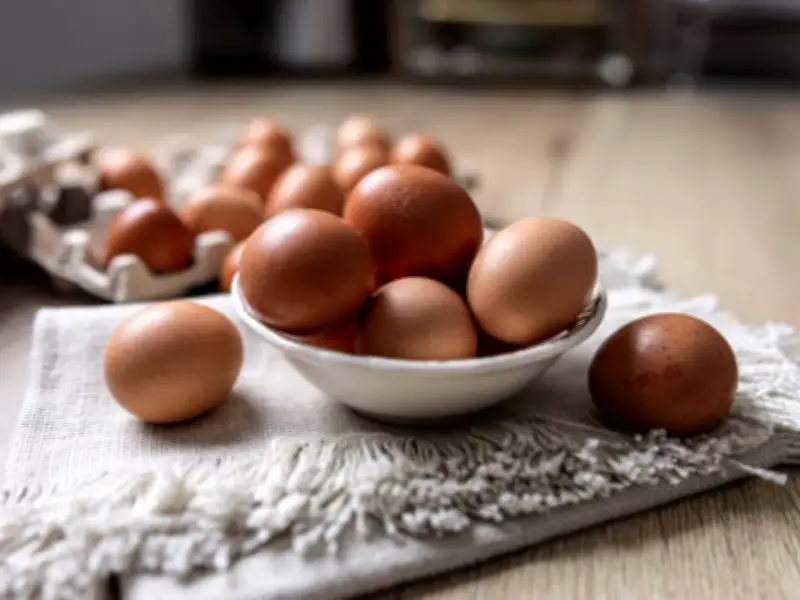
The British Egg Industry Council has suggested that eggs can be safely stored for a remarkable 12 months. This means you could have eggs tucked away and readily available whenever you fancy enhancing a breakfast dish or salad with an egg.
Received wisdom dictates that eggs are best kept in the fridge, rather than left out at room temperature. When stored in the refrigerator in their original carton, eggs will stay fresh for around three weeks.
Separated egg whites can be kept for up to three weeks in an airtight container, while yolks remain usable for approximately three days when covered and refrigerated. However, for those looking to extend the shelf life of their eggs, a straightforward food storage trick could prove invaluable.
How to safely store eggs
The Council offers guidance on freezing whole eggs, as well as yolks and whites separately, to help tackle food wastage, reports the Express. It notes that although eggs can be frozen for a year, it is best to use them within four months to maintain optimum freshness.
The instructions are straightforward: "To freeze eggs whole, the white and yolk will need to be beaten together. Pour the contents into a container suitable for the freezer, label with the date, seal and freeze."
According to the Council, freezing egg whites is a "simple procedure". You simply need to pour them into a container, combine them together, seal it firmly and freeze. To speed up the defrosting process, it is advisable to freeze them in smaller portions. This guidance proves particularly useful when recipes require only egg yolks or whites, leaving you with surplus that would otherwise be discarded.
Freezing yolks and defrosting tips
Freezing egg yolks, however, requires a few additional steps. Begin by separating them and placing them into a suitable container. Owing to their thicker texture, egg yolks will congeal if left in their natural state, making them unsuitable for use in recipes. To avoid this, add half a teaspoon of salt, or one to one-and-a-half tablespoons of sugar for each 240ml of raw egg. Use salt for savoury dishes and sugar for sweet ones.
It is essential to ensure your eggs are thoroughly defrosted before consumption. Regardless of their form (egg whites, yolks or mixed), frozen eggs must be completely thawed and should only be used in fully cooked dishes. They should never be cooked straight from frozen.
To defrost, move the egg from the freezer to the fridge overnight to minimise exposure to bacteria. For a speedier approach, run cold water over the frozen container. Finally, be sure to use the eggs as soon as they have fully thawed.




