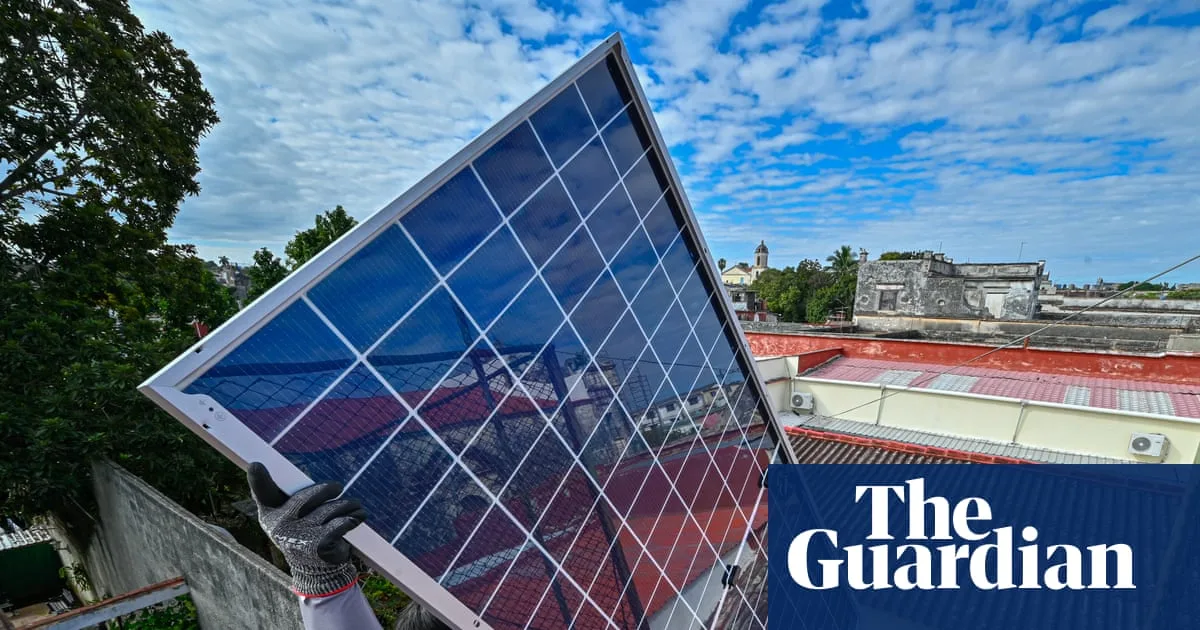
Cuba is accelerating its transition to renewable energy as it grapples with tightening US sanctions, chronic power cuts, and the impacts of the climate crisis, with China emerging as a key partner. The island has committed to increasing renewables to 26% of total energy supply by 2035, a pledge made in its recent contribution to the UN Framework Convention on Climate Change.
In the eastern village of Herradura, farmer Roberto, who lost much in Hurricane Melissa late last year, sees hope in new electricity lines carrying power from what is expected to become Cuba's largest windfarm. “I think the park is a good thing. It will help with electricity and directly benefit the people,” he said. The storm affected 3.5 million people, damaging or destroying 90,000 homes and 100,000 hectares of crops.
Cuba's energy woes have deepened since Venezuela halted oil shipments under pressure from Donald Trump in January, leading to outages lasting up to 24 hours, particularly in the east. The government argues that renewable projects will ease shortages and help the country adapt to a climate crisis that makes it one of the most vulnerable nations, according to the Intergovernmental Panel on Climate Change.
Reinaldo Funes, a professor of environmental history at the University of Havana, links these vulnerabilities to centuries of degradation. “Almost 90% of the country's original forest cover was cleared, first to supply the Spanish naval industry and later to expand sugarcane production,” he said, adding that the sugar industry caused severe soil erosion.
In early February, the government announced emergency measures, with Deputy Prime Minister Óscar Pérez-Oliva Fraga prioritising solar park construction, largely with Chinese support. Cuba has targeted 92 solar parks with a total capacity of 2GW by 2028, and by October 2025 had completed 35. In December 2024, Havana and Beijing signed an agreement for seven solar parks with a combined capacity of 35MW, building on a renewable energy push dating back to the 1980s.