Gardeners should prune dead or damaged wood from Japanese maples after leaf fall to keep the trees healthy and looking their best through winter, according to the Royal Horticultural Society (RHS).
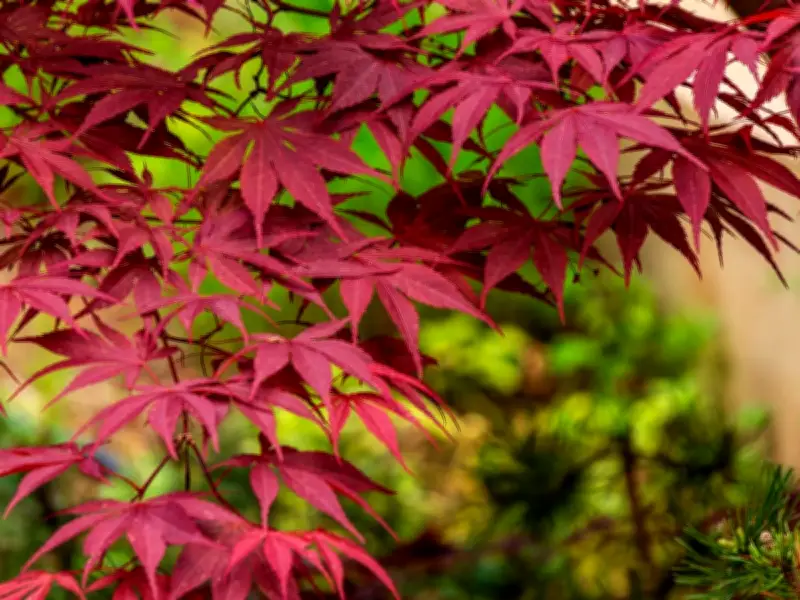
Japanese maples, also known as Japanese acers, are prized for their vivid red foliage. As winter approaches, these plants begin to shed leaves and enter a dormant phase, making it an ideal time to prepare them for the following spring.
Why prune in November
Winter is a good time to prune acers because the branches are clearly visible, making it easier to identify which sections are dead and require removal. Pruning any later than the end of December can cause the plant to "bleed" sap, according to Jackson's Nurseries.
Dead stems and branches can be identified by their greyer colour, compared with the dark reddish-brown typical of acers. These sections should be cut back as close to the base of the stem as possible, so the plant does not waste energy on them. Overlapping branches that rub together or grow too close should also be trimmed, as they can increase the risk of infection.
Pruning benefits and leaf scorch
Pruning helps keep the plant's leaves healthy and strong, as cold weather can cause damage. In some cases, leaf scorch can lead to premature leaf drop and dieback of smaller branches.
Cutting Japanese maples back to a desired height and shape can help them stay healthy through winter. Because the plant is dormant during this period, pruning does not cause it stress. The RHS advised taking extra care during late winter and early spring, as cold winds and potential frost can scorch the leaves. When trimming, gardeners should remove only dead, damaged, and overlapping branches.
Normal leaf drop and winter care
It is normal for Japanese acer leaves to drop in autumn, and vivid red leaves may turn brown and crispy. Gardening expert Ish Kamran said this is entirely normal, as acers are deciduous plants and lose their leaves in winter, with sap returning to the roots.
Ish said: "If you don't know, acers are deciduous plants. So what happens in the winter, they do lose their leaves, and all of that natural sap that's in here goes all the way down back into the roots, which is great for us because it means that in the next couple of months or so, I can actually prune this to any shape that I really fancy and it won't do any damage."
He added: "That's the really good thing about deciduous trees; you always prune them in the winter."
Ish noted that the plants won't require feeding yet, as they will soon enter their dormant period. However, if the soil is drier than expected, gardeners should give the tree a thorough watering before it rests for winter. He said: "Next year when it gets to March-April time, you'll start to see brand new shoots, and that's when you can give it a little bit of an acer feed."
He also advised: "If you notice you've got a really pale little grey stem, chances are that one is a dead stem, so you can just prune that right away; it doesn't matter if it's spring, summer, the dead ones can go straight away."