
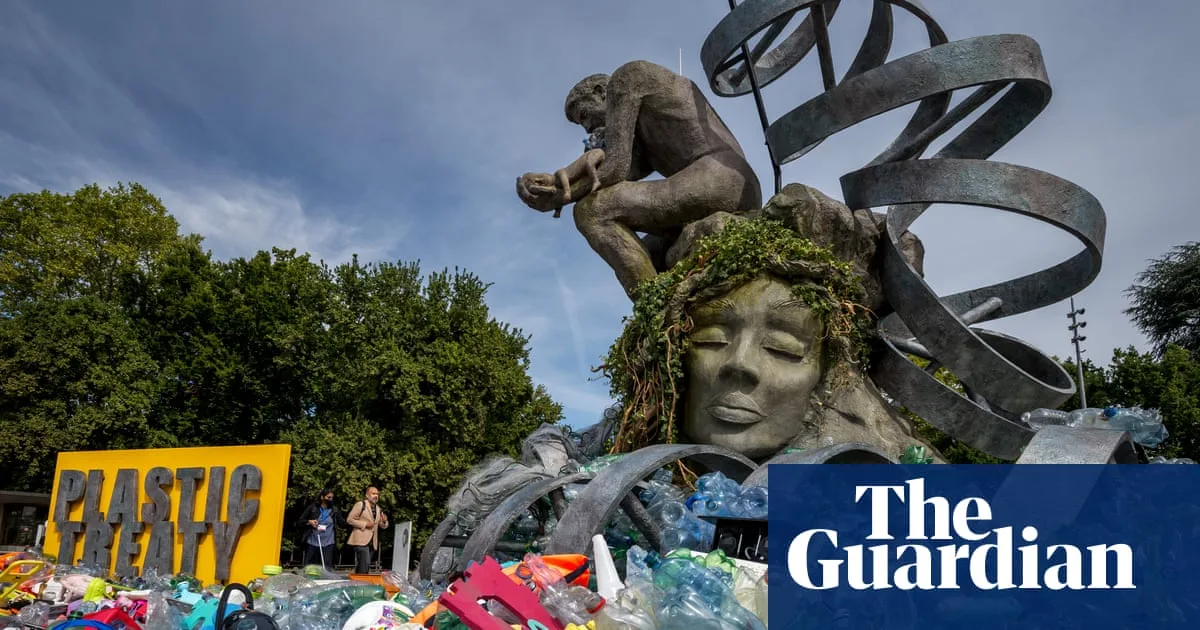
Professor Richard Thompson, a leading marine litter expert, has urged delegates at the UN plastic pollution treaty talks in Geneva to secure an ambitious global agreement, saying they must be able to 'look the next generation in the eye'. Thompson, who was named one of Time's 100 most influential people this year, stressed that decisive action is needed to protect human health and the planet.
Delegates from more than 170 countries are meeting in Geneva to bridge deep divisions over whether limits on plastic production should be included in the final treaty. Last November, talks in Busan, South Korea, broke down without agreement. More than 100 countries support legally binding global reductions in plastic production and the phasing out of certain chemicals and single-use plastics. However, nations with large fossil fuel industries, such as Saudi Arabia, China, Russia and Iran, oppose production restrictions and advocate for a focus on waste management and recycling.
The scale of the crisis was underlined by a new report warning that plastic pollution causes disease and death from infancy to old age, responsible for at least $1.5tn (£1.1tn) a year in health-related damages. Plastic production has increased more than 200 times since 1950 and is expected to almost triple to over a billion tonnes a year by 2060, driven largely by single-use plastics.
Thompson, who first coined the term 'microplastics', said an ambitious treaty would be a gamechanger. 'It is now clear that plastic pollution contaminates our planet from the poles to the equator,' he said. 'We find microplastics in our deepest oceans and our highest mountains. There is evidence of human exposure from the womb throughout our entire lifetime.' He added: 'I really hope negotiators can look the next generation in the eye and say they acted decisively.'
Since 2022, when the UN secured an agreement from 173 countries to develop a legally binding treaty, five rounds of talks have failed to produce a final text. The number of plastics industry lobbyists has increased at each session, with 220 fossil fuel and chemical industry representatives attending in Busan last year. Thompson noted that some countries see an economic threat from production cuts, but said the mandate is clear: 'Plastic pollution is harmful. Business-as-usual is not sustainable.'




