
The night sky is getting 10% brighter every year, and with it, humanity's connection to darkness is fading. But if more cities regulate outdoor lighting, the environment could improve for all living creatures.
Living in Portland, where street lights, porch lights and parking lot glare keep the night illuminated, one resident realized she had forgotten what it feels like to sleep in darkness. Traveling to a residency in south-east Oregon, part of the International Dark Sky Places network, she found herself surrounded by 2.5 million acres of unpolluted night.
A Night Under the Stars in Oregon
She invited other residents to stargaze, and everyone said yes. Thirty minutes after sunset, they trekked through tall grass to a dry lakebed, setting headlamps to red to preserve night vision. Lying on blankets, they spotted Venus, Vega, and numerous satellites, their movement revealing them as artificial.
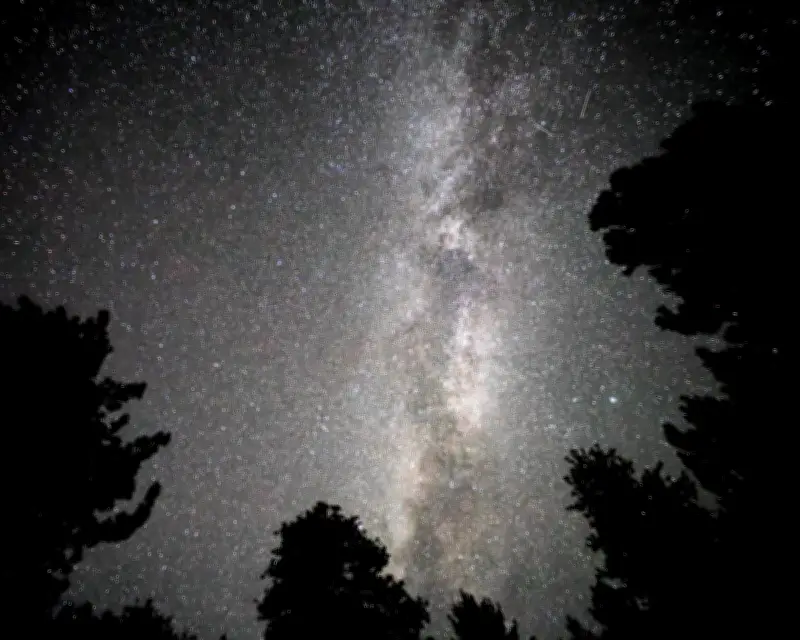
As darkness deepened, more stars and constellations appeared: Ursa Major and Minor, Cygnus, Cassiopeia. When the Milky Way rose as a band of light, the group fell silent, witnessing shooting stars until they felt small.
The Growing Problem of Light Pollution
Every year, the night sky becomes 10% brighter, and 80% of people live under light-polluted skies. While the UN declared a healthy environment a human right, the author argues for a right to darkness as well.
This doesn't mean turning off every streetlamp, but replacing overly bright floodlights with ones that are just bright enough could help. Preserving darkness would require rules on light warmth, direction, and brightness, and avoiding unnecessary lights. Some communities have already acted: Flagstaff, Arizona, introduced outdoor lighting rules in 1958 and became the first Dark Sky City in 2001. New York state is now considering a Dark Skies Protection Act.
Darkness as a Habitat and a Right
Access to darkness is about more than stargazing; the night is its own habitat. Artificial lights confuse animals that navigate by the moon, such as baby sea turtles and moths. Lightning bugs and frogs need darkness for courtship, and migrating birds get thrown off course by city lights.
Light pollution's effects persist into daylight, disrupting plant-pollinator relationships, changing when trees flower, and disrupting circadian rhythms for all creatures, including humans. Studies show darkness is needed for rest and health.
Most light pollution comes from street lights, buildings, parking lots, and sports courts, but satellites pose a growing threat. Even dark sky sanctuaries can't stop the more than 11,000 Starlink satellites in orbit, or a company planning to use satellites to illuminate areas up to three miles wide. Space launches aren't required to have environmental reviews.
The stars have been maps, calendars, and landmarks. Now, the night sky is a luxury out of reach for many. But darkness can belong to all again—not making every city like rural Oregon, but making a few more stars visible, letting creatures rest, and giving everyone a reason to look up.




