
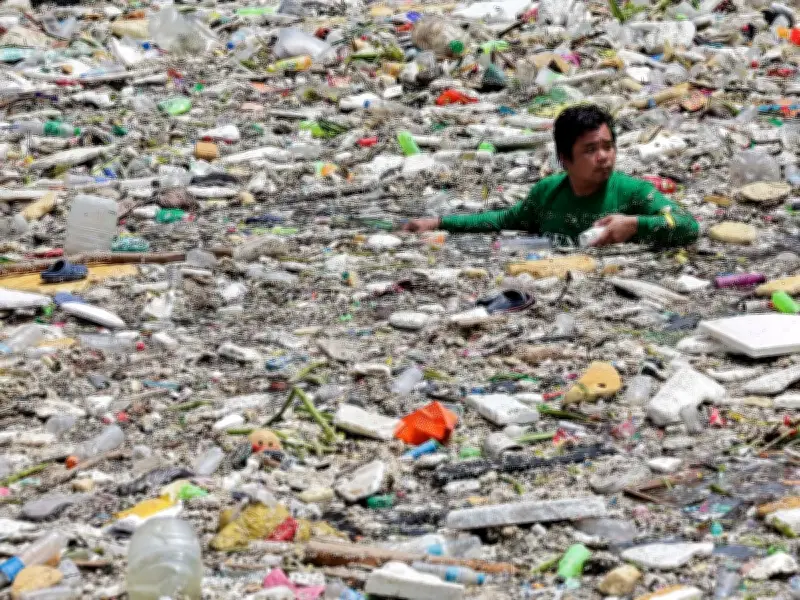
Rubbish collectors in Metro Manila, the Philippines, have been pictured combing through a sea of rubbish after it was thrown into a 'trash trap' following heavy rain. Workers have been deployed into the debris-choked waterways of Paranaque City, where nine days of torrential rainfall have caused at least 16 deaths.
Monsoon Floods and Waste Accumulation
The monsoon season has left the city, the seventh most populous in the world with 27.1 million residents, awash with mishandled refuse that has accumulated in rivers and streams. Workers, backed by cranes, boats, and large containers, have been wading through nearly shoulder-deep waters to clear the mess.
The worst-hit area is the Redemptorist Water Channel in Barangay Baclaran, where refuse collectors were submerged up to their necks and visibly caked in dirt. Pictures show a vast number of plastic bottles and a lone croc shoe among the debris, with water barely visible under the thick layer of waste.
Government Response and Penalties
The surge of rubbish has prompted discussions about waste disposal, with the national leadership at Malacañáng Palace backing proposals for harsher littering penalties. Local Government Units (LGUs) have been blamed for the surge, with Palace officials calling the situation 'truly shocking'.
Palace press officer Claire Castro said on Tuesday: "This is not what the government wants to happen. We want proper waterways where water can flow freely."
Ongoing Cleanup and Historical Context
The Parañaque City Government said in a social media post that the images were the product of a 'trash trap' which had caused rubbish to pile up. Officials said: "The CENRO Task Force continues its waterways clean-up operations to remove accumulated garbage and debris from the Redemptorist Water Channel in Barangay Baclaran. This is after garbage from the Manila Bay entered the water channel."
Rubbish has been a persistent issue in Manila, with a 2021 study estimating that the city's Pasig River contributed up to six percent of plastics from rivers leaking into the ocean. Thousands of families live in makeshift houses along the waterway, once a vital food source and transportation route.




