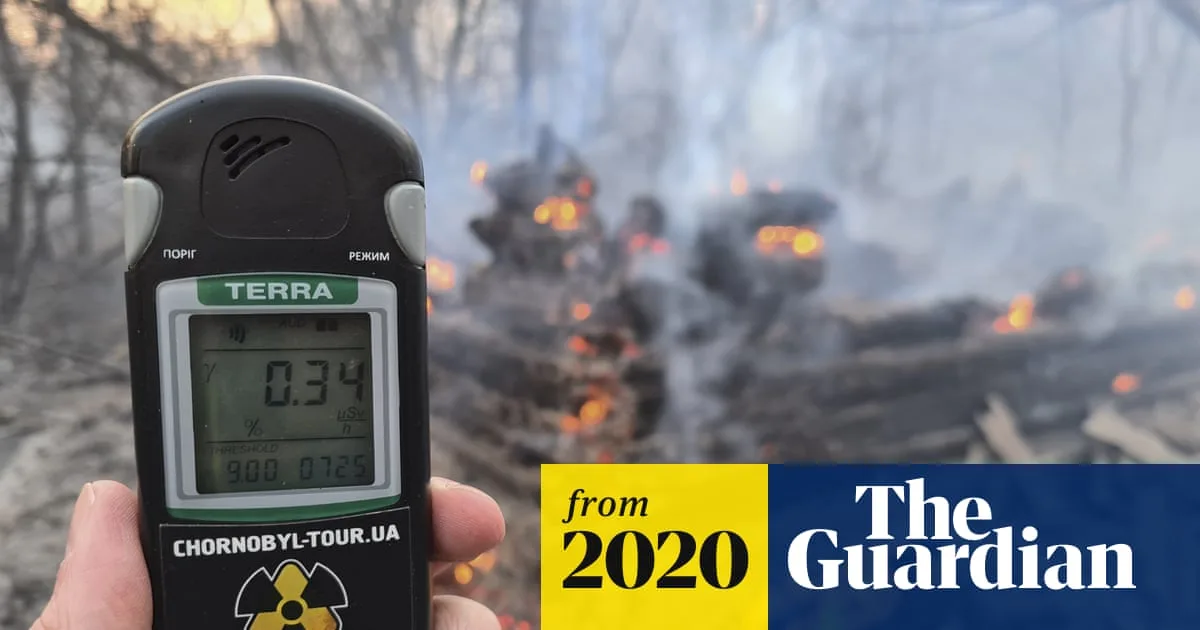
Ukrainian officials have sought to calm public fears after a forest fire in the restricted zone around Chernobyl caused radiation levels to spike. The blaze began on Saturday near the site of the world's worst nuclear disaster, forcing the deployment of more than 100 firefighters supported by aircraft.
Yegor Firsov, head of Ukraine's state ecological inspection service, reported that radiation in the fire's centre was 16 times above normal. However, he stressed that there was no rise in radiation levels in the capital Kyiv, located about 60 miles south of the exclusion zone. “You don't have to be afraid of opening your windows and airing out your home during the quarantine,” he wrote on Facebook.
Firefighters managed to extinguish the smaller of the two fires, but the remaining blaze still covered about 20 hectares as of Monday afternoon. A 27-year-old man has been arrested on suspicion of starting the fires, allegedly setting grass and rubbish alight “for fun” before losing control as the wind picked up.
The Chernobyl Exclusion Zone remains contaminated after the 1986 reactor explosion, which polluted large areas of Europe. While fires are common in the region's forests, the incident has renewed scrutiny of the practice of lighting grass fires, which Firsov condemned as “barbaric”.