
Sea ice surrounding Antarctica has reached a record low for winter, far below any previous level observed since satellite records began. The ice extent currently measures less than 17 million square kilometres, which is 1.5 million square kilometres below the September average and well below previous winter record lows. This missing ice covers an area roughly five times the size of the British Isles.
Scientists describe the situation as alarming. Walter Meier, who monitors sea ice at the National Snow and Ice Data Center, called the data 'mind-blowing' and expressed doubt that the ice will recover significantly. The decline is part of a worrying trend: summer sea ice has hit record minimums three times in the past seven years, including February 2023.
Antarctica's ice plays a crucial role in regulating the planet's temperature by reflecting solar energy and cooling the surrounding water. Without it, the continent could shift from being Earth's refrigerator to a radiator, experts warn. The loss of sea ice also exposes dark ocean areas that absorb sunlight rather than reflecting it, triggering a feedback loop known as the ice-albedo effect that accelerates melting.
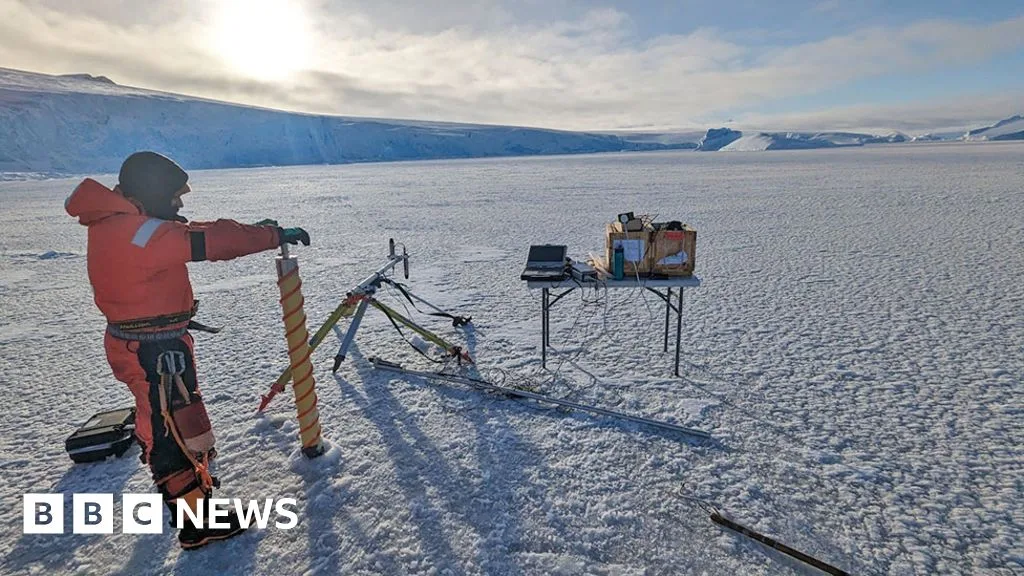
The impacts are already being felt by researchers on the ground. Dr Robbie Mallett of the University of Manitoba, based on the Antarctic peninsula, noted that this year's thin ice poses risks to his team, including the possibility of ice breaking off and drifting out to sea with them. Dr Caroline Holmes at the British Antarctic Survey warned that as the season transitions to summer, an unstoppable feedback loop of ice melting could develop.
Since the 1990s, land ice loss from Antarctica has contributed 7.2 millimetres to global sea level rise. Even modest increases can lead to dangerously high storm surges threatening coastal communities. Professor Martin Siegert, a glaciologist at the University of Exeter, described the potential awakening of Antarctica as 'an absolute disaster for the world.' Professor Anna Hogg of the University of Leeds noted that current ice sheet changes are in the worst-case scenario range of predictions.
Until 2016, Antarctic winter sea ice had been growing, but an extreme heatwave in March 2022 pushed temperatures to -10°C when they should have been around -50°C. Scientists are still trying to understand all the factors behind this year's low ice, but some believe it may signal a fundamental shift in the region's climate. Dr Mallett described Antarctica as the 'Wild West' in scientific terms, with much still unknown about ice thickness and other key variables.




