
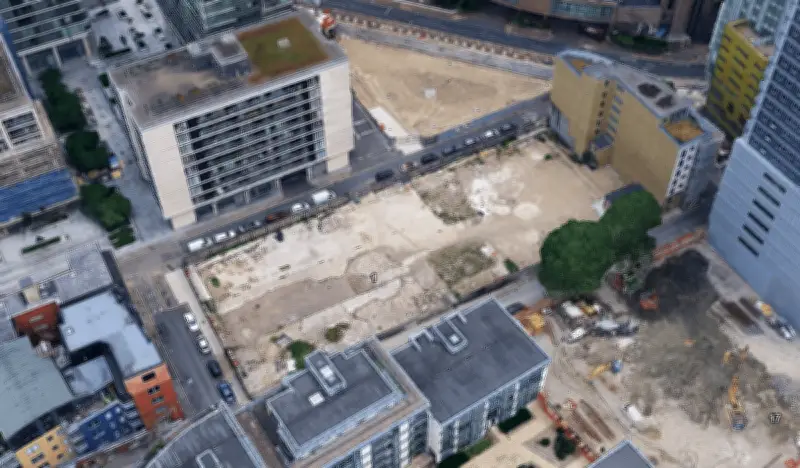
A property developer's proposal to install a diesel generator within a children's play area at a new housing development on the Isle of Dogs has been rejected by local authorities. Ballymore, which secured permission last year to construct a 350-home tower block at 25 Cuba Street in Millwall, sought to amend the plans to include an emergency generator.
Council Rejects Amendment
Tower Hamlets Council turned down the amendment last week, expressing concerns that "children are particularly vulnerable to the effects of poor air quality." According to a covering letter from the developer's planning agent, Ballymore intended to place an emergency "life safety" diesel generator room within a planned second-floor roof terrace play area designated for children aged 0 to 4. The letter stated that Ballymore had been unable to find an alternative location.
The letter noted: "Alternate locations have been explored, including within the wider landscaping and publicly accessible park, however due to concerns raised by LBTH planning officers, this other location has been discounted." It also claimed that the generator was "a low emission engine" designed to "mitigate any potential impact" and would have been placed seven metres from the nearest residential window.
Testing and Maintenance Concerns
The covering letter further explained that the generator would require regular testing—weekly, monthly, six-monthly, and yearly—and that the play space would need to be closed "for the duration of the test maintenance." It argued: "For weekly and monthly testing, the level of exhaust fumes will be minimal, as the emergency generator will be idling on low load. The generator will only be tested at full load for the yearly testing regime."
However, the council's air quality officer objected to the proposal. In a planning officers' report, they stated: "This is a highly sensitive location because children are particularly vulnerable to poor air quality. Given the proximity to the children's play space, the applicant would need to justify why a diesel generator is necessary in this location and why a cleaner alternative cannot be used." The report also noted that diesel emissions would still spread into the surrounding area even when the play area was closed.
Additional Objections
An environmental health noise officer observed that residential windows would be less than ten metres from the generator, "with direct line of sight to the exhaust." Planning officers also objected to the potential loss of play space. The generator room would have occupied 137 square metres of the second-floor play area. Ballymore proposed compensating for this by adding 137 square metres of play space in a public park to be built as part of the development. However, planning officers argued that this would encroach on play space previously approved for children aged five to eleven, as well as public paths, leaving "uncertainty" about whether the relocation could be "satisfactorily accommodated within the public park."




