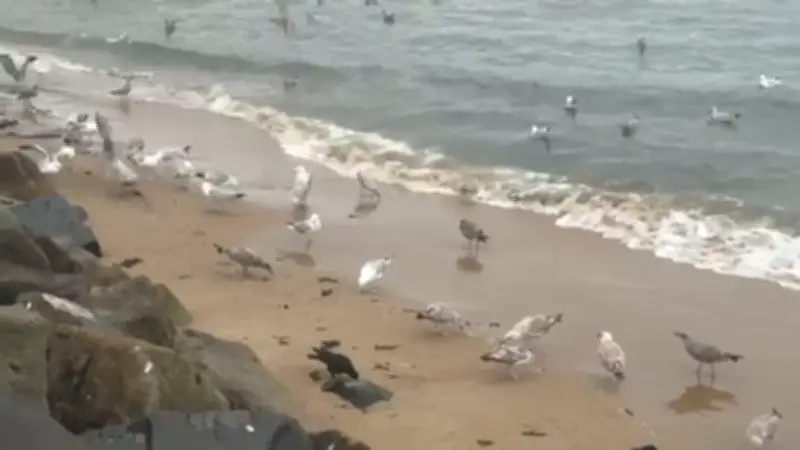
Herring gulls and their young have been filmed pecking at plastic pellets known as nurdles on Fish Quay Beach in North Shields, raising concerns about starvation and other health impacts on seabirds.
Distressing sight for kayaker
Kayaker Sonja Bear, from Cullercoats, captured the video on Tuesday morning and described the scene as "extremely distressing." The 39-year-old said: "It's exactly what we're all worried about. We have seen birds picking them before, but we have never seen this amount of nurdles and birds in the same place."
"I'm not a person who cries very often but I care about the wildlife around here. It was very, very distressing to see," she added.
Nurdle spill and clean-up effort
Around 25 tonnes of nurdles are understood to have spilled into the River Tyne after a collision between the vessels Wind Orca and BG Orange on July 19. A volunteer effort of more than 1,000 people has been removing pellets from beaches stretching from Cambois in Northumberland to Sunderland.
So far, volunteers have collected an estimated 285kg of nurdles, which is just over one percent of the total spill. Sonja, who is a kayak guide, has been scooping nurdles from the river herself and called on the Port of Tyne to send more people in small boats to help with the clean-up.
She said: "It (picking up from a kayak) is really efficient, we're testing new methods. We don't want to encourage people who don't have the equipment and the knowledge because the risks are too high, but the Port of Tyne should send more people in small boats here."
Health risks and official response
Seabirds and marine wildlife often mistake nurdles for food, which can lead to digestive blockages, starvation, reduced reproduction, and the transfer of pollutants through the food web.
The Port of Tyne said on Monday that volunteers will play a major role in deciding how the Port approaches the continuing clean-up. Anyone who finds dead birds is urged not to touch or move them, but to report to the Animal and Plant Health Agency, which can conduct post-mortems to determine if plastic pollution played a role in the deaths.