
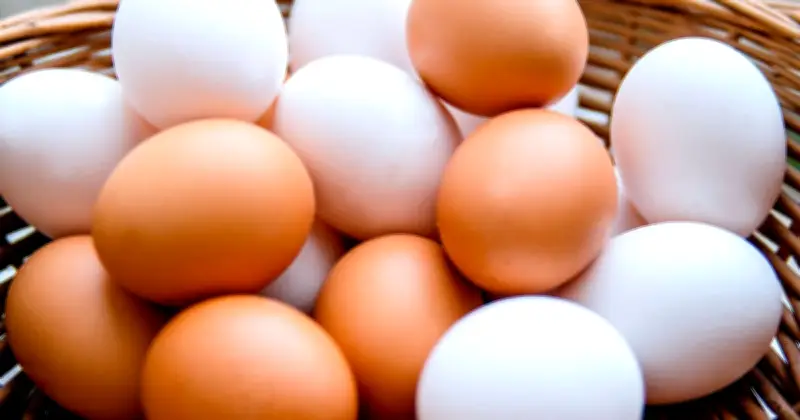
The debate over white versus brown eggs has been settled by experts, who unanimously agree there is no nutritional or taste difference. The only distinction lies in the breed of the hen that laid them.
This clarification comes after Sainsbury's announced in June that it will exclusively stock white eggs, citing a 12.7% lower carbon footprint compared to brown eggs. The supermarket chain attributes this to white-feathered hens requiring less feed while producing the same number of eggs.
Why Sainsbury's Switched to White Eggs
Britons consume approximately 14.5 billion eggs annually, generating an estimated 4.35 million tonnes of carbon dioxide emissions. If the entire industry adopted white eggs, emissions could drop by more than 550,000 tonnes of CO2 per year, equivalent to taking nearly 300,000 cars off the road.
Richard Mew of Bird Brothers, a Bedfordshire-based egg producer, explained: "The difference between white eggs and brown eggs is simple: white eggs come from white hens, while brown eggs come from brown hens. But when it comes to taste and cooking instructions there is no difference."
What Determines Eggshell Color?
Henry O'Connor, creator of Better Eggs, stated: "White eggs are mostly laid by hens with lighter feathers and earlobes, while brown eggs usually come from darker-feathered hens with red earlobes. That's it. The difference is purely cosmetic - it has zero impact on what's inside the egg."
Charlotte Thomas, regional assessment manager at RSPCA Assured, confirmed: "It sounds strange but it's true - the colour of a hen's earlobes will often match the colour of her eggs. So dark-coloured earlobes normally mean brown eggs, while lighter-lobed birds lay white ones."
The British Egg Information Service similarly stated that eggshell colour depends solely on the hen's breed, noting that white hens generally produce white eggs and brown hens brown eggs.
Nutritional and Taste Equivalence
Destini Moody, a board-certified sports dietitian, said: "White and brown eggs are essentially the same. You're getting high-quality protein, strong amino acid profile and nutrients like choline, vitamin B12, iodine and selenium."
The British Egg Information Service added: "There are no nutritional differences between brown or white eggs. Eggs are a natural, nutritionally dense food containing vitamins, minerals and high-quality protein in less than 80 calories, whatever the colour."
Paul Mason of Prep Kitchen noted: "People have very strong opinions about egg colour, usually because of something they were told years ago. A common one is that brown eggs are healthier and white eggs are somehow 'processed'. It just isn't true."
Cooking and Quality
Experts confirm that white and brown eggs cook identically. Edmund McCormick, food science consultant, said: "Both white and brown eggs will perform the same functions in the kitchen. They will coagulate, emulsify and whip equally."
Lindsey Chastain of The Waddle and Cluck explained: "The darkness of the yolk comes from how much sunlight and bugs the chickens get. The darker the yolk, the healthier the diet and the more sunlight a chicken got. Free range chickens have dark yellow to orange yolks."
Sustainability Benefits
Richard Mew highlighted additional advantages of white hens: "White hens have a more docile nature, meaning they are easier to manage, more feed-efficient, and are capable of producing eggs over a longer laying cycle than brown hens."
These traits make white eggs a more sustainable option, supporting greener practices without compromising on quality, nutrition, or flavour.




