
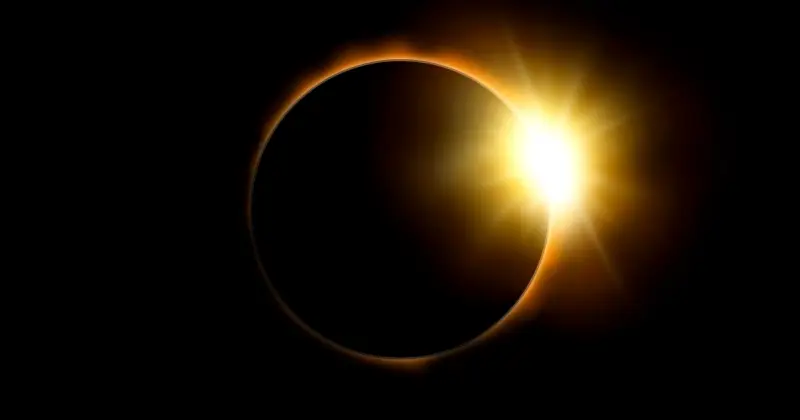
Millions of solar eclipse viewing glasses have sold out across the country, dashing last-minute hopes of organising a safe way to view the rare astronomical event over the UK without exposing yourself to a serious risk of harm. You should never look directly at the sun, including during a solar eclipse, but if you've not planned ahead and you don't have a pair of ISO-certified viewing glasses - which are now sold out everywhere - there is still a way you can observe tonight's solar spectacle without damaging your eyesight.
Glasses sell out across the country
The Royal Greenwich Observatory told the Press Association it had sold approximately 15,000 pairs of eclipse glasses – a sellout – in the last month. Now the Observatory has completely sold out of eclipse glasses while a viral social media clip from Tuesday evening showed queues around the block at one of the few remaining stores in London stocking the items.
Indirect viewing methods
If eclipse glasses are not available, NASA suggests using indirect viewing methods. These do not involve looking directly at the sun, but instead project the eclipse onto a nearby surface. For example, a pinhole projector can be made using a box, aluminium foil and a white sheet of paper. By taping foil and paper to both ends of the box, then punching a hole in the foil, you can indirectly view the sun shining through the hole onto the paper. During the different phases of the eclipse, you will be able to see the shadow from the Moon block out the light projected onto the piece of paper.
Use a colander as a simple alternative
But if all else fails - simply use a colander instead. If you do not have time to make a pinhole projector, the observatory recommends that a good alternative is using a colander. By watching the shadow that the colander projects onto the ground, you can safely view the phases of the eclipse.
“If all else fails, you can project the image of the eclipse using a household item like a colander which has lots of holes in – point the colander towards the sun with your back facing it, and in the shadow of the colander you’ll be able to see the eclipse in the holes, which is really cool,” – Imo Bell, a planetarium astronomer at the Royal Greenwich Observatory, explained.




