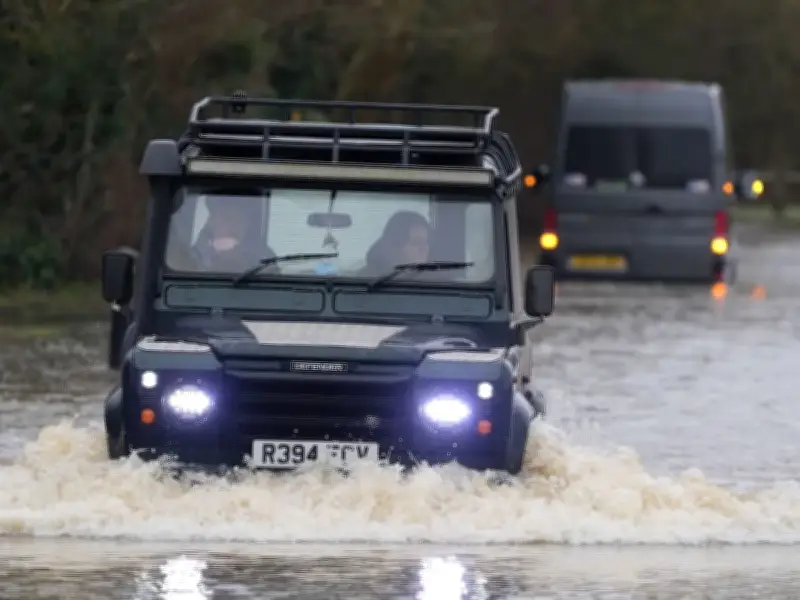
The government has launched a taskforce to respond to extreme weather this winter, including the risk of flooding as El Niño is set to hit. Although swathes of Britain are still in drought after a record hot summer, the Met Office has warned of a 'heightened potential' for wet, windy, stormy weather and flooding.
Millions of properties at risk
Some 6.3 million properties in England are at risk of flooding. The Environment Agency has urged households to check their flood risk, sign up to alerts and make a flood plan to prepare for any emergencies.
Emma Hardy, a Defra minister, said: "We're facing extreme weather, with flood and drought intertwined, but the Government is taking decisive action. We're taking a smarter, more joined-up approach to manage the nation's water and set up our new Flood and Drought Resilience Taskforce.
"This will put communities and businesses at the heart of our work and will make sure the UK is ready for whatever the weather brings next."
Taskforce first meeting
The first meeting on Wednesday will bring together the Met Office, Environment Agency and mayoral authorities as well as the farming, water and insurance industries.
The government has committed at least £10.5 billion until 2036 to protect homes, businesses and critical infrastructure from the growing threat of flooding.
Last winter, storms Bram, Goretti, Ingrid and Chandra caused widespread destruction in the UK, including severe flooding.
El Niño warning
The new taskforce comes ahead of the potential difficulties El Niño may bring this winter. The Government is preparing to launch a nationwide campaign to ensure the public is informed about essential supplies, evacuation routes and emergency contacts.
The campaign is expected to advise people on vital items to keep at home, including a battery or wind-up torch, bottled water and tins of non-perishable food.
Scientists report that the El Niño climate phenomenon is now the most powerful event on record, potentially bringing increased rainfall and storms this autumn, as well as cold snaps in late winter. Chilling warnings delivered by experts said it could also disrupt weather patterns across the globe, raising concerns over international food supply chains.
When questioned about whether the public should be concerned about El Niño – which could heighten the risk of storms this autumn and winter – Security Minister Dan Jarvis said: "Well, it's been quite a tough summer. The prime minister has made a commitment to do a wildfire summit and we'll be honouring that commitment.
"I think we have to be prepared for the winter. We'll see what weather comes, but on the balance of probabilities, there will be a number of challenges that we have to face over the course of this coming winter."
What should you keep in an emergency kit at home?
It comes as the Government has previously advised people to keep emergency supplies at home. These include:
- Battery or wind-up torch – torches are safer than candles.
- Portable power bank for charging your mobile phone.
- Battery or wind-up radio to get updates during a power cut – a car radio can be used, however in severe weather it might be safer to stay inside.
- Spare batteries for torches and radio and a backup battery for any medical equipment you rely on.
- A first aid kit (or some first aid items) including items such as waterproof plasters, bandages, a thermometer, antiseptic, eyewash solution, sterile dressings and gloves, medical tape for dressings, and tweezers.
- Hand sanitiser and wet wipes for hygiene purposes when the water is off.
- Bottled water – there is no standard figure for this as emergencies can vary in duration and people use different amounts. A minimum of 2.5-3 litres of drinking water per person per day is recommended by the World Health Organisation for survival. 10 litres per person per day will make you more comfortable by also providing for basic cooking and hygiene needs. Additional water might be needed to make up baby formula, for medical devices and for pets.
- Non-perishable food that doesn't need cooking, such as ready-to-eat tinned meat, fruit or vegetables (and a tin opener). As with water, how much you need will vary based on your own circumstances. Don't forget food for pets.
- Baby supplies such as nappies and baby formula – ready made or 'ready-to-feed' formula is best as you may not be able to boil water or sterilise bottles.