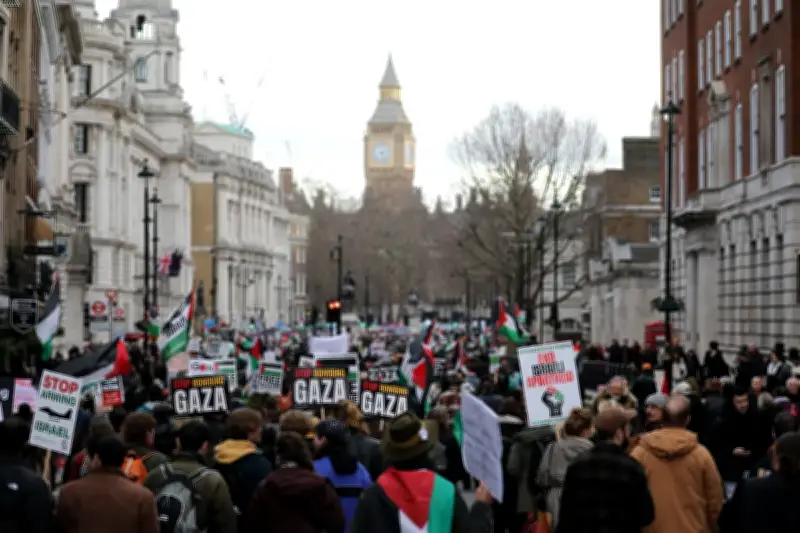
Around 10,000 protesters are expected to march through central London on Saturday, October 10, marking three years since the start of the war in Gaza. The National March for Palestine, organised by the Palestine Solidarity Campaign, will be the first such march in three months.
Protest details and route
Protesters will gather at Victoria Embankment at midday, with the Trade Union Bloc assembling near Cleopatra's Needle. The procession will make its way from the Embankment towards Westminster Bridge, along the South Bank to Waterloo Bridge and the Strand, before ending with a rally in Whitehall at 5pm.
Organisers are calling for an immediate end to military action in Gaza, a complete halt to UK arms exports to Israel and the introduction of sanctions. Coaches are being organised from cities across the UK, including Bristol, Manchester and Coventry, to bring demonstrators to central London.
Police restrictions and response
The Metropolitan Police has announced it will impose conditions relating to the timing, route and assembly points for Saturday's march, but has yet to release these. Deputy Assistant Commissioner James Harman said several hundred officers would be deployed, with specific legal conditions under the Public Order Act due to be communicated ahead of the weekend.
“The policing presence on the day is expected to be significant, with several hundred officers involved in ensuring disruption is kept to a minimum and any crime or disorder is dealt with swiftly and robustly,” he said.
“There have been 35 large protests organised by the groups that make up the Palestine Coalition since October 2023. Those taking part all have their own varied motives and allegiances. The majority who attend do so peacefully and do so lawfully, but we have seen arrests from a small minority across these protests for racially and religiously aggravated public order offences, for stirring up racial hatred and for supporting terrorist organisations.”
Counter-protest and enforcement
A counter-protest by Stop the Hate is also expected. The Met has reiterated its approach to chants and wording on banners that officers believe could incite hatred or indicate support for terrorism or other forms of extremism.
“We have arrested and charged individuals for calling for an intifada at protests, with those cases working their way through the courts,” Mr Harman added. “Our officers will take firm action if when they see or hear antisemitism, anti-Muslim abuse, incitement to violence, language that clearly points to support for terrorists or proscribed groups, for example Palestine Action.
“We will arrest for those offences when we see them at protests and marches in the coming week. We will investigate post-event where necessary. And specialist investigators will work at pace to present the cases to the Crown Prosecution Service to ensure those responsible are swiftly put before the courts.”