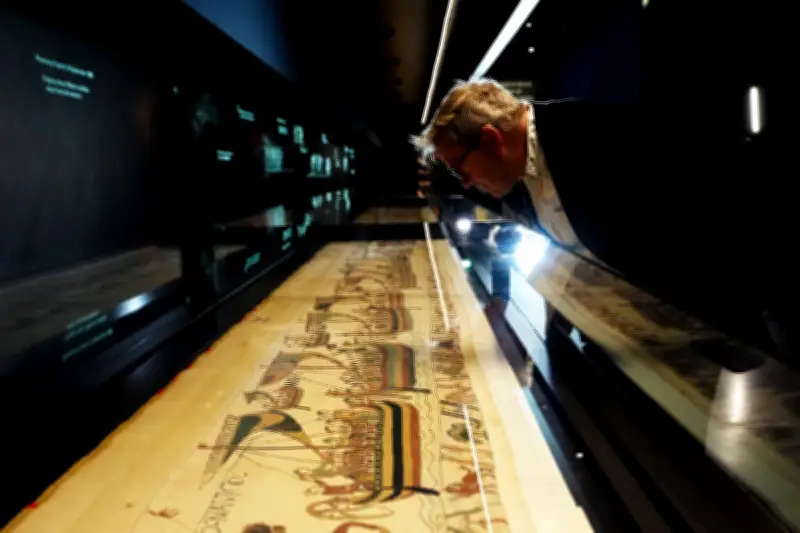
The British Museum has introduced a series of measures to tackle lengthy queues for the Bayeux Tapestry, which recently went on display in London for the first time in almost 1,000 years.
The woven record of the Norman Conquest has been on show at the museum since September 10. A spokesperson said the response to the tapestry had been extraordinary, but acknowledged that some visitors had faced longer queues than the museum would have wanted.
New measures to improve visitor experience
From Monday, an audio guide will be available to help visitors experience the tapestry with extra detail, alongside clearer signage to explain the different parts of the exhibition. Additional seating will also be added, and opening hours will be extended to ease queues during the day and space out allotted bookings.
Two weeks ago, the museum stopped visitors from taking photos of the 70-metre artefact after people stopping to take snaps caused significant delays. Many ticket-holders have been turned away because of backlogs, and the museum has offered refunds and a priority booking slot for a rearranged time to those affected.
Record ticket sales and future availability
Before the tapestry went on display, the British Museum said demand for the “once-in-a-generation exhibition” had already been unprecedented. When general admission tickets went on sale in July, the museum recorded its biggest day of ticket sales in history, generating more than £2.4 million in the first 24 hours.
Tickets are sold out until the next release on October 21. Adult tickets cost £33 during peak times and £27 at off-peak hours, while children under 16 can visit for free. The tapestry usually costs 12 euros (£10) to see at the Bayeux Tapestry Museum in Bayeux, Normandy, and will return there when the museum reopens after renovation.
Historical significance and display details
The tapestry is considered one of the wonders of the medieval world, offering an insight into life in 11th century England before and after the conquest, from castles, warfare and ships to clothing, food and furniture. It was likely commissioned by a Norman patron and made by English embroiderers using manuscript drawings from Canterbury.
The Bayeux Tapestry remains on display at the British Museum until July 11 next year.