
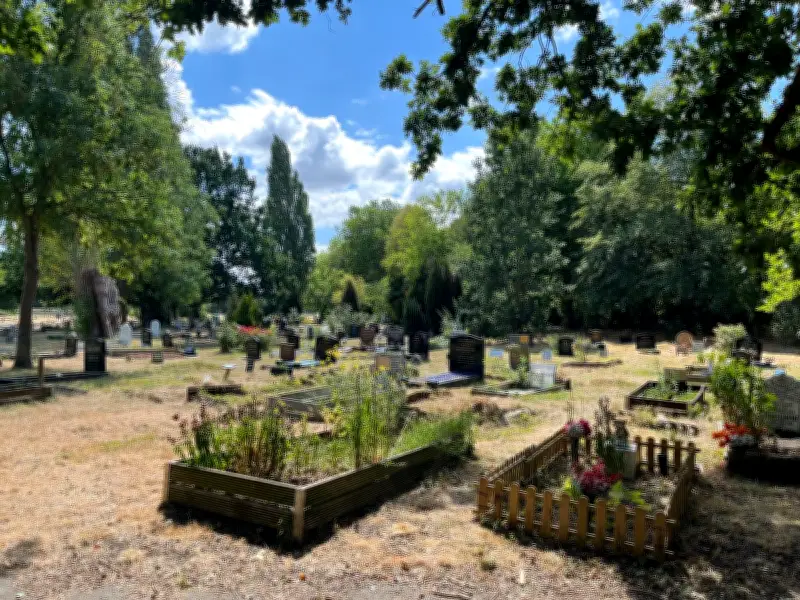
More than half of London's local authorities will run out of burial space within 15 years, according to a City Hall audit, prompting calls for the Mayor to use his convening powers to avert a crisis.
The audit reveals that 17 local authorities will have no burial space left by 2040, while three – Camden, Hackney and Tower Hamlets – have none currently. With London's population ageing, with the proportion of those aged 65 and over predicted to reach 40.9 per cent by 2040, pressure on burial space is set to intensify.
Draft London Plan suggests solutions
City Hall's draft London Plan suggests boroughs may need to use low quality Green Belt land, known as 'grey belt', for additional capacity, and design new graves for 're-use' by making them double or triple the usual depth.
Liberal Democrat Assembly Member Hina Bokhari, who experienced the struggle firsthand when burying her late father 15 years ago, said: "There is a real crisis point now that if we don't face this issue now, there will be families at an increasing rate that are going to have the most devastating news of their loved one passing away, but then finding out that they can't actually bury their loved one where they live."
Strategic approach needed
The audit, released earlier this year, warns that many boroughs, particularly in inner London, are either nearing capacity or have none left. Nine of 25 boroughs that responded said they relied on out of borough provision due to limited open space.
Ms Bokhari called for a strategic London-wide approach, saying: "There needs to be a plan, but there needs to be action behind that plan. And I want the Mayor of London to lead on that action." She urged the Mayor to bring together cemeteries, faith communities, and boroughs to develop a concrete way forward.
Local solutions before Green Belt
The draft London Plan encourages boroughs to plan pro-actively for burial space expansion, re-use, and long-term provision. Officials have advised re-using graves over a century old, increasing burial depth, and considering grey-belt and Green Belt sites.
Ms Bokhari welcomed recognition of the issue but said the Green Belt solution should be "way down the list", urging councils to first look at their own land and surrounding cemetery areas. She stressed the need for a clear, concrete approach from councils.
In the House of Lords, Liberal Democrat peers have introduced a bill requiring councils to plan ahead and track capacity. Currently, local authorities have the power to provide cemeteries but are not legally required to do so. If passed, the legislation would mandate guaranteed burial ground space in local development plans.
Ms Bokhari warned the issue could become the next social care crisis if ignored, saying: "It's important that we talk about it now."
A spokesperson for the Mayor of London said: "The draft London Plan makes clear that boroughs should plan pro-actively and collaboratively for the expansion, reuse, and long-term provision of burial space. In doing this, it's important that they recognise cultural and faith needs. Councils should also refer to the Audit of London Burial Provision, which provides evidence to support boroughs in developing local policies and planning for future burial provision, as part of their Local Plans."




