
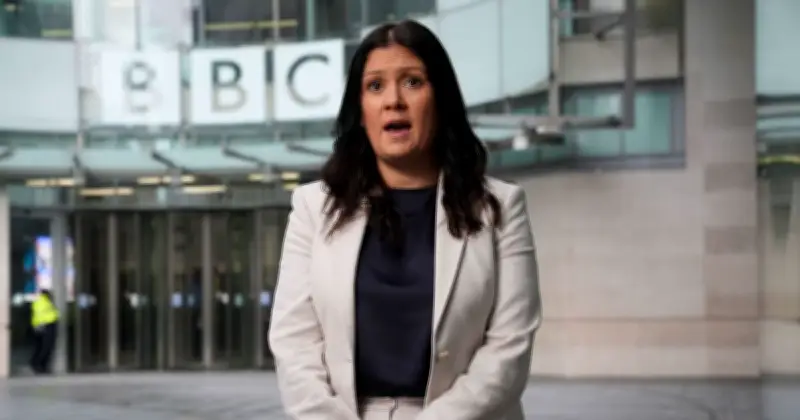
Every household could be forced to pay a TV licence even if they do not own a television or use BBC services, under plans supported by MPs. Culture Secretary Lisa Nandy has been urged to consider introducing a compulsory levy for every household to replace the existing £180 licence fee.
Charges could be added to council tax bills or the cost of internet services. The plan would be controversial, MPs on the House of Commons Culture, Media and Sport Committee admitted, but they said it may be the only way to "preserve the BBC as an institution for the nation".
Funding review ahead of Charter expiry
Ministers are considering ways to fund the BBC as part of a review of the broadcaster's Charter, which expires at the end of 2027. While 23.3 million households have a licence, the number fell by more than half a million last year. An estimated 27 million households have a television.
The BBC believes that 94% of individuals use its services each month, while only 80% of households pay. Under current rules, a licence is required to watch "live" television-style services online, meaning a service with a schedule. There is no need for a licence to watch on-demand programmes except for those on the BBC's iPlayer.
Committee urges reform of licence fee
Other options include allowing advertising on the BBC or introducing a subscription fee. But in a new report, the Commons Committee said a compulsory fee for everyone may be the only way to save the broadcaster. It said: "To preserve the BBC as an institution for the nation, we must maintain a means of universal funding. The current TV licence fee is outdated and no longer fit for purpose."
The report added: "All of the alternative funding options have drawbacks. The best next step is for the government to reform the licence fee, so it is no longer linked to a television set. And it should keep an open mind on a household levy as a long-term solution."
Dame Caroline Dinenage and Lisa Nandy respond
Committee chair Dame Caroline Dinenage said: "This is a pivotal moment for the BBC. Continue along the current path and we condemn a national institution to managed decline, squandering the immeasurable benefits it brings to our economy and society."
She added: "For all its faults, the BBC drives our creative economy, supports our democracy through media sovereignty, and delivers world-class entertainment and moments that bring us together. Like a much-loved family member, we may criticise and grumble about the BBC but we would miss it enormously if it were no longer here for us."
BBC Director General Matt Brittin has also backed a general household levy. Culture Secretary Lisa Nandy told the inquiry the falling numbers paying the licence fee "is an existential threat to the BBC".
She said: "We are looking at a whole range of options at the moment. The director general's view is that a household levy is much simpler, and it is much simpler, but it is also potentially more regressive. At a time when the cost of living is biting for a lot of people, I think a new tax on households is too challenging to ask most families to accept, so we are looking at a range of options for how we could potentially expand the scope."
The MPs' inquiry also found that the BBC is unable to put all of its back catalogue onto iPlayer because some is owned by independent companies that made the programmes. It urged the broadcaster to do deals making more older programmes available. The Committee also called on the government to force social media firms to give prominence to impartial news from the BBC, to counter the spread of disinformation online.




