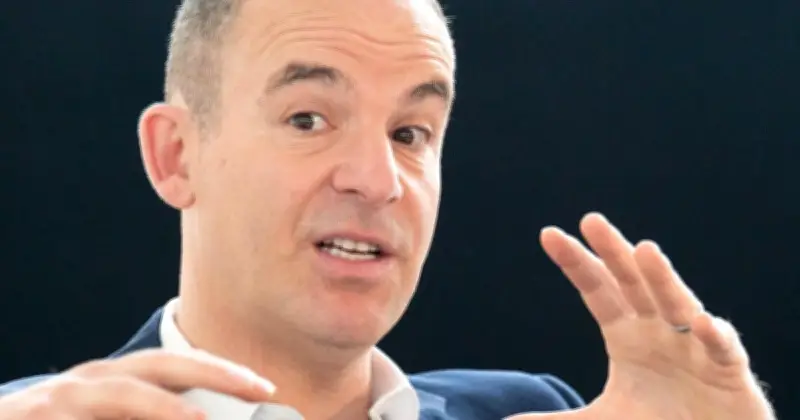
Martin Lewis has launched a new scheme encouraging the public to share ideas to help improve living conditions in the UK. The Money Saving Expert founder's new "Institute for Small Ideas" initiative aims to bypass "structural and partisan" issues that typically preoccupy politicians, and instead focuses on smaller fixes across a wide range of areas that could make people's lives "easier or better."
People can submit ideas to improve areas from health, schools and transport, to housing, policing, justice, shopping, money, and more. The Institute, which launched last week (October 8), will consider ideas submitted before the deadline of Thursday, November 12, 2026. They can be submitted by all members of the public, as well as charities and organisations that represent those who can't represent themselves.
What type of ideas will make the cut?
Sharing some prompts for acceptable themes for "small ideas," the Money Saving Expert suggested that they must be practical solutions to issues, not just complaints. They also must be doable. Additionally, the suggestions should be relatively inexpensive; if they are too costly, Governments, regulators, or councils are unlikely to implement them.
The ideas should have a significant impact, whether that means helping millions of people in a small way or thousands of people in a larger way. The suggestions should also be "hard to disagree with." This means they should be the kind of ideas that around 80% of people, regardless of their political views, would agree are sensible.
The Institute will say no to proposals that are too local, for example, a drinking water fountain in your local park won't make the cut (but a water fountain in every park may do). They also can't be overly political, and they can't be illegal or harmful.
What happens once the ideas are in?
The Institute, run by innovation charity Nesta's Centre for Collective Intelligence and the public participation charity Involve, will take the public's ideas for everyday fixes and turn them into professional policy. Following the initial crowdsourcing phase, the team at Nesta will first filter the submissions to ensure they fit the criteria.
Then Involve will convene academics, specialists and policy experts to check the practicality and feasibility of the ideas, turning them into professional policy proposals. A longlist of ideas will be published, and the public will be able to provide feedback on them.
Finally, the cross-party panel will review the ideas and the feedback to select a final list of around 50 doable proposals and ensure they have appeal across the political spectrum. The Institute will then take this manifesto of small ideas to decision-makers and campaign for their implementation.
Martin Lewis, founder and chair of the Institute for Small Ideas, said: "Every day, people run into the life-potholes of unintended consequences, clunky systems and poor rules that make things harder than they should be. If we can fix some of those frustration points, we can make people's lives easier, save time and help everyone get on with work or the things they enjoy."
He added: "The possible combined effect, and feel-good factor, of the fixes combined shouldn't be underestimated. Yet this won't work just by policy wonks in digital towers brainstorming. I've learned in my day job that if you want to know what's really going wrong, ask the people living it."
The cross-party panel of politicians and policy experts includes Jonathan Bartley (Green Party), Mayor Tracy Brabin (Labour), Dame Tamara Finkelstein (former permanent secretary), Danny Kruger MP (Reform), Polly Mackenzie (Liberal Democrats), Dame Penny Mordaunt (Conservative), Emma Roddick MSP (SNP), Kwajo Tweneboa (social housing campaigner), and chair Martin Lewis CBE.
Kathy Peach, director of the Centre for Collective Intelligence at Nesta, said: "The Government is understandably busy grappling with big structural questions, but that shouldn't stop us from getting smaller, straightforward things done. Until now, there hasn't been a good way to find ideas from communities around the UK and make sure they get a fair hearing, or get them into our statute books and regulations. The Institute for Small Ideas is designed to change that, acting as the bridge between the public's practical solutions and political action."
Sue Tibballs, CEO of Involve, said: "Years of bringing people into decision-making have shown us that the public are brilliant at understanding problems and finding solutions. Those on the receiving end of policy and services know best where things aren't working, and they're often the first to spot how to fix them. The Institute for Small Ideas is an exciting democratic innovation that gives everyday experience and common sense a real route to power, helping to find ways to make life better for us all."
An example that inspired Mr Lewis to set up the initiative centred on confusing council tax reduction forms. Hundreds of thousands of people with conditions such as Alzheimer's disease, dementia or severe strokes are eligible for a hugely underpublicised council tax reduction, under the Severe Mental Impairment (SMI) rules. Yet often councils have their own application forms and bespoke processes, including on how and when to involve doctors. This sows confusion, Mr Lewis said, and makes it harder for charities to provide guidance to vulnerable people. This, he says, leaves too many who need the discount without it. After Mr Lewis and his team's campaigning, Wales and England have committed to having only one form and one system.
Other examples of possible ideas include: making real-time sewage alerts visible at all beaches; introducing standardised allergy displays on menus; and ensuring parking meters allow people to clock out, so they pay only for the time they use, rather than guessing in advance. Ideas can be submitted via the official website.