
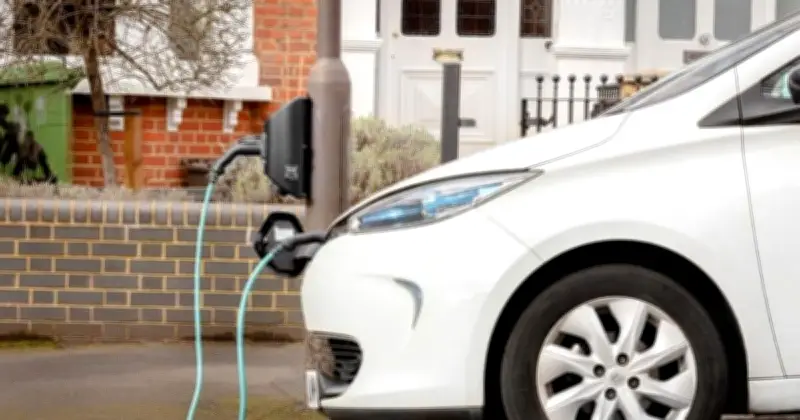
From tomorrow, October 1, VAT on domestic electricity drops to zero, a move that will be felt in millions of households' bills. But under the same tax system, a driver without a private driveway will still pay VAT at 20% to charge an electric car at an on-street charge point. That is four times the standard domestic rate, on the same commodity, used for the same purpose.
A Quiet Penalty for Kerbside Chargers
John Lewis, CEO of char.gy, argues this gap deserves the Chancellor's attention in this month's Budget. char.gy installs charge points on lamp posts and street infrastructure for the millions of people who don't have a driveway to plug in on. That disproportionately affects renters, city-dwellers, and people for whom public charging is the only way they can own an electric car at all.
From October 1, those drivers become the one group of electricity users in Britain still paying full VAT. This sits on top of other electricity cost inputs, most of which sit well outside any charge point operator's control. Wholesale electricity is linked to volatile international gas prices, even on days when gas generates only a fraction of what's on the grid. Some green levies still sit on electricity bills rather than gas bills.
Cost Pressures on Public Charging
Business rates are assessed per charging unit, which penalises a network of hundreds of small street-level chargers. The way the grid charges for network access still doesn't reward the overnight, off-peak charging pattern that most kerbside drivers already have. Every one of those inputs currently works against fairer pricing for people who rely on the public charging network the most.
Government has shown real appetite to act here. This year's steps to bring forward wholesale market reform and rebalance some policy costs off electricity bills were genuine progress. The Budget is the next moment to build on that, and VAT is the clearest, simplest place to start.
A Call for Fairness
Bringing VAT on public charging down to the same 0% rate applied to domestic supply wouldn't just be fair. It would send a clear signal that government wants electric vehicles to be a realistic option for the two in five UK households without off-street parking, not just for those who can afford a driveway and a wallbox.
Alongside it, char.gy urges the Chancellor to keep pushing on other levers that inflate the cost of a public charge: accelerating electricity market reform so gas stops setting the price of largely clean power, making sure the business rates system doesn't penalise distributed street-level infrastructure, and ensuring network charging reform rewards off-peak charging.
None of this is about asking for special treatment. It's about ending a tax anomaly that was always hard to justify and is now, from October 1, impossible to defend. Government has taken the first step for households with a driveway. The Budget is the moment to finish the job for everyone else.




