
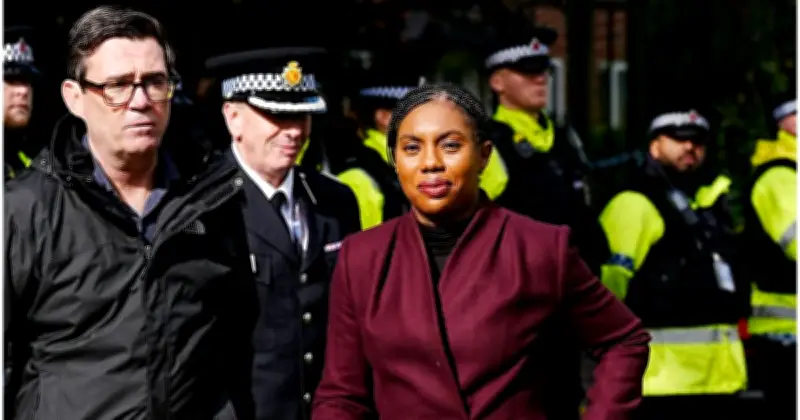
New Prime Minister Andy Burnham has invited the leaders of the two biggest opposition parties to join him in fixing adult social care. The move makes him the seventh UK PM in 10 years - a record by some distance.
In one stroke, the new leader has turned a thorny, election-risking issue - hiking taxes to pay for social care - into a shared problem rather than a Labour burden. He has also thumbed his nose at the leader of the UK's fifth-largest party, who is currently awaiting a by-election against a bin.
A threat to the triple lock?
If this strategy pays off, the unlikely alliance could turn its attention to what is arguably the largest single problem facing the Government's finances: the triple lock.
State pensioners and those near retirement are fiercely defensive of the triple lock. They worked hard all their lives, paid their taxes, and want their dues. They have been promised that their pension payments will never be outstripped by inflation, nor by the wage growth of those still in work. The Express has campaigned for the triple lock to be protected, and Labour, along with other parties, promised to keep it in their election manifesto. Burnham has also personally pledged to keep the lock on pension increases in place.
But every financial think tank, Government body and money expert has been calling for the lock to be scrapped. The Office for Budget Responsibility called it 'unsustainable' and warned that debt will 'grow explosively' if it is kept. The Tony Blair Institute called for the triple lock to be scrapped, while the National Institute of Economic and Social Research (Niesr) said the lock is 'very, very expensive' and will get even more expensive.
Election suicide?
Touching state pensions in any way is surefire election suicide. Sir Keir Starmer saw his polling crippled when he tried to tweak the Winter Fuel Payment, and it never recovered even after a significant u-turn.
Older people make up the largest voting bloc, and political precedent suggests that fiddling with older people's income rules is handing your opponents an open goal. Back in 2010, a Labour idea to levy a 10% inheritance tax to pay for social care was nuked by the Conservatives, who called it a 'death tax'. Less than 10 years later, Theresa May's idea to free up the value of people's homes to pay for social care was taken down by Jeremy Corbyn, who called it a 'dementia tax'.
Burnham says his approach is 'problem-solving, not point-scoring', which could be a solid way forward on social care. But state pensioners will worry that this is a slippery slope towards other electorally untouchable issues, like means testing the state pension, or finally grabbing the triple lock nettle equally across all three main parties.
After all, no one party dares to do it alone - they would be unelectable for years. But a mainstream political 'cartel' could have the buying power to sustain the kickback. State pensioners will certainly hope this is not the beginning of a political shift that could cost them a pretty penny.




