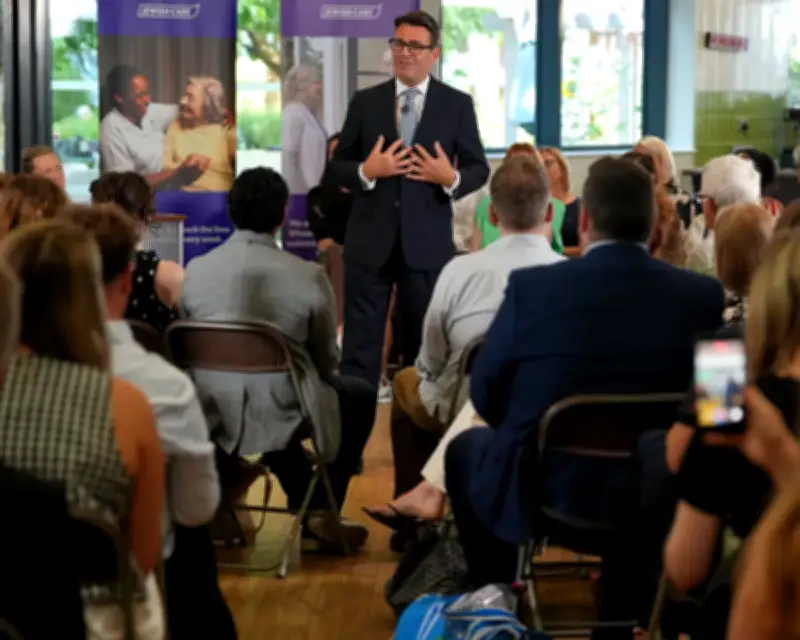
Andy Burnham's conference speech has achieved what few political addresses can: it shifted public opinion on a sensitive policy. The proposal to reform the pensions triple lock, in exchange for creating a national care service, has seen a dramatic swing in public support.
A YouGov poll now shows 48% support for the Burnham plan, with just 28% against. Survation finds 64% backing it, with only 15% opposed. This is a stark contrast to previous polls, where the triple lock enjoyed overwhelming support, including a Persuasion UK poll this week showing 65% in favour, and a Times YouGov poll this month showing 93% of pension-age people defending it.
The Power of Linking Policies
The key to this shift was making an emotional connection between reforming the triple lock and creating a national care service. This approach has left opponents, such as Kemi Badenoch's Tories and Nigel Farage's party, appearing out of touch with public sentiment.
However, this is only the beginning of a long journey to 2030, when these plans are slated for the next Labour manifesto. Burnham is mindful that political fortunes can change rapidly, noting he is the seventh PM in a decade.
The Care Worker Promise
The most tangible promise is to improve the lives of care workers, who Burnham described as "Caring for other people's parents on poverty pay, but doing it with huge skill, humour and humanity." He pledged, "I promise you, I won't leave this job without doing everything I can to change things for you."
Steps are already being taken, with a fair-pay agreement for care workers on the way and the first national pension scheme announced by health secretary Yvette Cooper. The next steps include training, pay, and career ladders comparable to NHS healthcare assistants.
The Challenge of Reforming Care
The broader plan to create a national care service faces significant hurdles. The care system, privatised under Margaret Thatcher, now consists of about 19,000 organisations in England, with varying quality. The Care Quality Commission, aware of shortages, sets a low bar for standards.
The biggest conundrum is who pays. Currently, 23% of people receiving at-home care and 37% in residential care are self-funders, contributing £14bn a year. Burnham's proposal would relieve them of care costs, but not bed and board, as in Scotland. This would be a substantial expense, and only 21% of people think the state should pay for all care regardless of wealth.
With over 400,000 on care waiting lists and 2 million older people with unmet needs, the pressure is immense. The NHS also needs better care services to free up 13,000 beds a day. Louise Casey is set to report next year on solutions, but a free NHS-style system is unlikely to be recommended.
The task ahead is to rebuild a complex and broken system into one that is fair for all, despite steely opposition. This will be the prime minister's real challenge.