
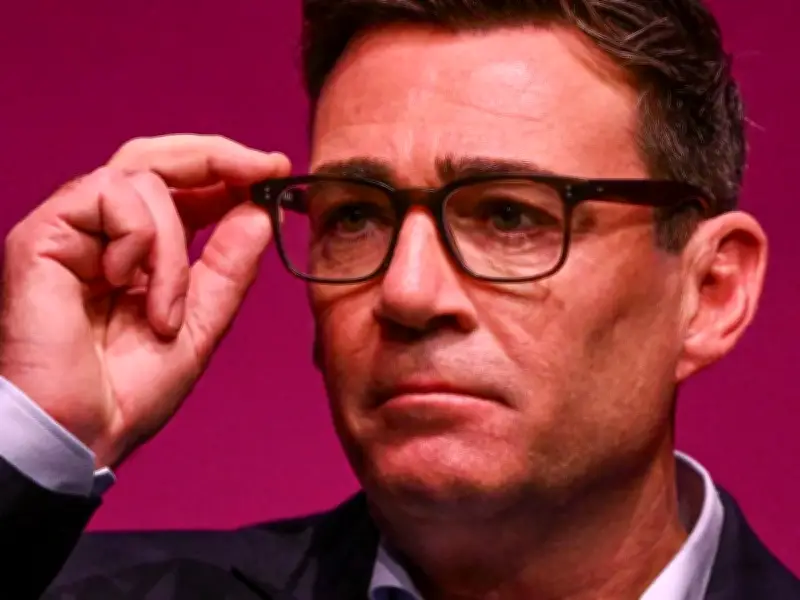
Andy Burnham broke down in tears during his first conference speech as Prime Minister, vowing to create a country his late father would be proud of and outlining a series of major policy reforms. The emotional moment came three-quarters of the way through his address, when he fell silent for what seemed like an eternity, leaving many in the crowd to wonder if the autocue had malfunctioned.
He then spoke of his father's death, recalling that the Scottish First Minister had said on that day that Burnham would be the last Prime Minister of the United Kingdom. “I quote that not to seek sympathy, nor to criticise John Swinney. I don’t think he knew the news at the time. And anyway, my dad Roy would have been the first to defend his right to say it. I relay it because I want you to know how it made me feel. Utterly determined to prove him wrong,” he said.
A Personal Story of Working-Class Aspiration
Burnham's speech, which lasted just over an hour, was woven around the theme of creating a country his father ‘would be proud of’. He began by telling the crowd about his granddad, who drove a lorry along the docks of Liverpool, and his grandma Kitty, whose ‘drive’ from her Irish ancestors spurred her to put down a deposit for a house where Burnham was born, near the conference venue. He told the story because it was ‘the same story of so many British families of my generation, of working class aspiration’.
This personal narrative stood in contrast to what delegates had said the day before about his predecessor. While previous Labour leaders like Tony Blair and Gordon Brown had a story to tell, Keir Starmer did not, and he also lacked a vision for the country. Burnham, however, certainly had a tale to tell, and a vision, whether one liked it or not.
Policy Announcements and a Break with Tradition
Each anecdote from his life was linked to major policy changes. The home his grandma Kitty painstakingly bought, a chance denied to many young people without parental help, was later sold to pay for her care, with her engagement ring ‘ripped’ from her finger and stolen in a care home. Burnham promised that the younger generation would have the same home security she once had. He also announced a new, national care service, thanking the staff who looked after his dad.
The reforms would be paid for, he said, by ending the pensions triple lock, but that would come in 2030. He received cheers when he announced a strengthened water bill that would repeal Thatcher’s ‘ideological ban on public ownership of water companies’. The union reps sitting behind the reporter loved that one. “Slagging off Thatcher pleased me immensely,” one told the reporter.
Reception and Reactions
While Burnham did not attack his opponents, unusual for a party leader, he drew more cheers as he called out those on the right and demanded more public ownership. “The British right talk about 'taking back control'. Never let them forget, they are the ones that gave it away in the first place,” he said to rapturous applause, earning a standing ovation from many. By the end of his speech, there were about a dozen standing ovations.
One party member told the reporter that the venue was virtually empty during the prime minister’s speech, unlike last year when more people were walking around the halls when Keir Starmer was speaking. When Burnham said 'thank you’ to his predecessor, it received a smattering of polite applause.
The audience seemed to feel the sense of hope that was the theme of the conference. “Absolutely yes,” said Mandy from Dorset. “It was amazing, so uplifting! We have been in dark times and we’re finally getting someone who can get us through that.” Overall, the mood was summed up by a gentleman sitting behind the reporter: “If [Burnham] can do two thirds of what he’s promised today, it will be fantastic. Some things are going to be difficult but you don’t get brilliance without hard work.” The true difficulty of the task will become clearer after next month’s Budget.




