
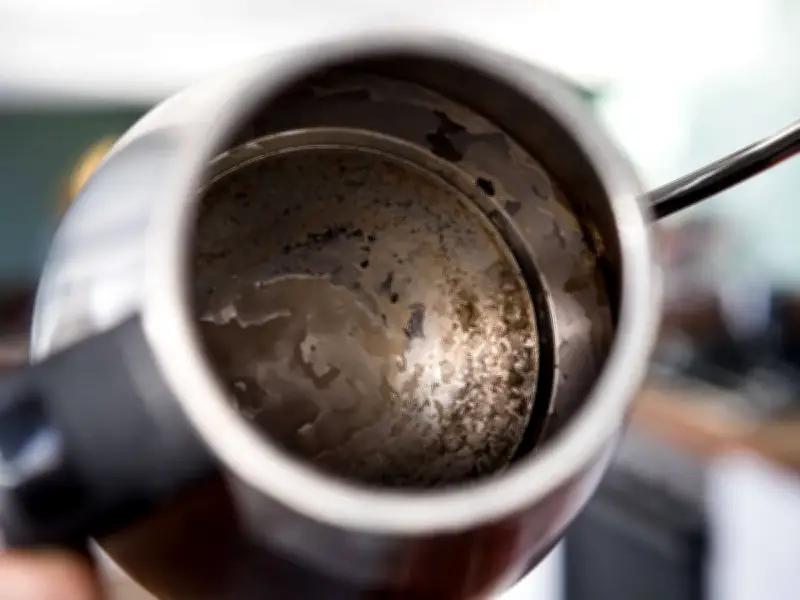
Kettles are among the most frequently used appliances in UK homes, yet they often succumb to one infamous problem: limescale. A 35p supermarket item provides a simple solution, according to appliance brand Morphy Richards.
If your morning brew is tasting slightly off, limescale accumulation in your kettle could be to blame. With numerous areas across the UK experiencing hard water, limescale and mineral deposits can develop quickly and frequently, making it essential to clean kettles from the inside on a regular basis.
Cheap and effective descaling solution
While limescale descaling solutions are commonly bought throughout the UK, they can seem like a rather expensive remedy. Descaling solutions can range from £2 to over £10 for well-known brands, and not everyone has that sort of spare cash to spend on the matter.
That's where a reliable 35p supermarket product proves useful. White vinegar or distilled vinegar is widely available in UK supermarkets, with a 568ml bottle priced at just 35p at Tesco. Morphy Richards describes it as a "cheap but effective solution for descaling your kettle."
How to descale your kettle with vinegar
The process is straightforward: pour an equal ratio of water to white or distilled vinegar into the kettle and bring it to a full boil. Once boiled, leave the solution to sit for a minimum of 30 minutes.
After 30 minutes, unplug the kettle, empty the solution down the sink, and rinse the interior thoroughly with fresh water. Then refill with water, plug it back in, and bring to a full boil once more to ensure no residue remains. In stubborn cases, repeat the full-boil process.
Why limescale matters
Morphy Richards notes that limescale build-up can flatten the taste and texture of tea and coffee, and small pieces can float in drinks. It also increases boiling time by blocking heat transfer, which can damage the kettle's lifespan over time.
Additionally, while limescale itself is not harmful to health, it provides an adhesion point for bacteria to accumulate when the kettle is not in use.
Hard water hotspots in the UK
Certain UK regions are more prone to limescale due to hard water. Morphy Richards says limescale builds up as a result of bicarbonate minerals in hard water. The most affected areas include the South and South West (Hampshire, Wiltshire, Dorset, Bath, Bristol), London and the South East (London boroughs, Hertfordshire, Kent, Surrey, Berkshire), and East Anglia (Norfolk, Suffolk, Cambridgeshire, Ipswich, Norwich).




