
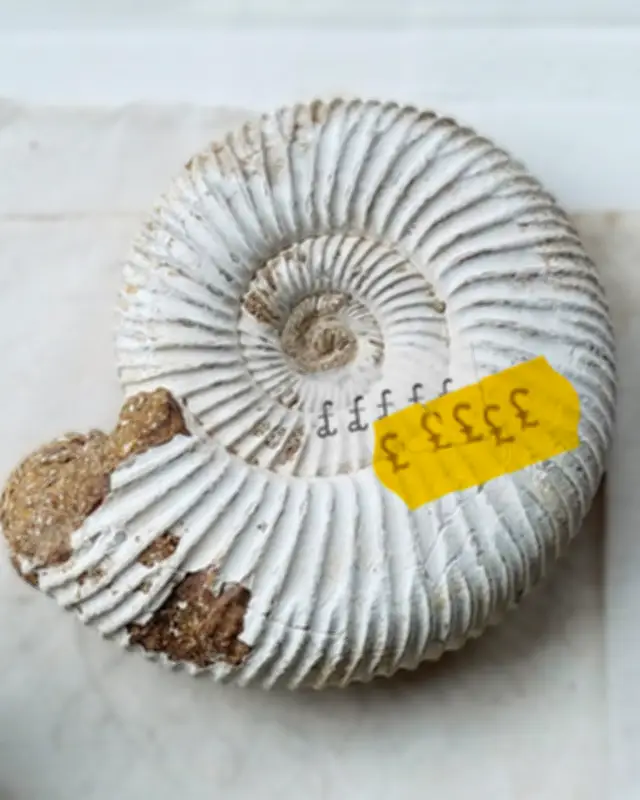
A significant collection of UK Jurassic fossils, comprising 318 specimens including ichthyosaurs, fish, and crustaceans, has been sold to the Natural History Museum Abu Dhabi. British experts have described this as a loss to the nation.
Funding shortfall
The collection, amassed by private collector Chris Moore from Dorset, was initially offered to the Natural History Museum in London and Amgueddfa Cymru (Museum Wales) for an eight-figure sum. Both institutions declined due to lack of funds, with an email suggesting the NHM had "no money at all" for acquisitions.
One curator, who wished to remain anonymous, expressed understanding for the collectors' decision: "I don't blame the collectors at all. That's all they can do. They can't sit on these things forever." They added that the issue is likely to recur as collectors age, raising the question: "Whose responsibility is it to fund our heritage and the preservation of our heritage? Because otherwise it could get lost."
National significance
The fossils come from the Lower Lias rock sequence in Lyme Regis, Charmouth, and south-west UK. Richard Butler, a professor of palaeobiology at the University of Birmingham, called it "one of the most important collections of fossils ever made on the world-famous Jurassic Coast of Dorset." He added that the sale "raises important questions about whether more should be done to preserve important and irreplaceable natural heritage such as this for the benefit of the UK public."
The Natural History Museum Abu Dhabi confirmed the purchase, with the collection now on display in its Mesozoic Gallery. A spokesperson noted that the Lower Jurassic rocks of the UK preserve excellent examples of marine life from when the Dorset coast was at a similar latitude to north Africa.
Legal and ethical context
In the UK, fossils are not automatically state property, unlike in countries such as Mongolia and Brazil. Collectors are encouraged to follow codes of conduct, but these are not legally binding. The west Dorset fossil collecting code advises offering category 1 specimens to UK museums for six months before selling elsewhere, but this is not enforced.
The sale has sparked debate among experts. Dr Erin Maxwell of the State Museum of Natural History in Stuttgart called it "a loss to the UK," though she noted it was partially offset by the fossils going to a museum rather than a private collector. She suggested the state should have a right of first refusal at cost price.
Phil Davidson, a palaeontologist at Charmouth Heritage Coast Centre, emphasized the importance of keeping the collection together and accessible to researchers, noting that "the location of where the museum collection is housed is secondary."




