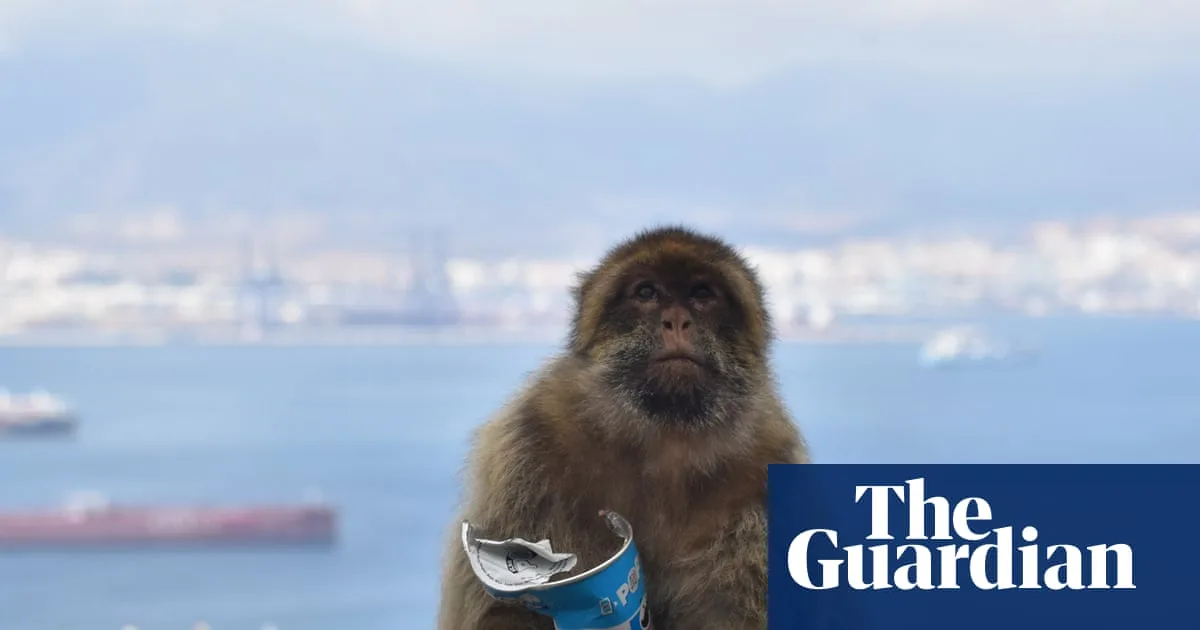
Barbary macaques living on the Rock of Gibraltar have developed a habit of eating soil, which scientists believe helps settle their stomachs after consuming junk food from tourists. Researchers from the University of Cambridge observed the behaviour, known as geophagy, in eight groups of macaques and found that those with the most contact with tourists ate the most soil, with consumption peaking during the holiday season.
Between summer 2022 and spring 2024, the team recorded 44 monkeys eating dirt on 46 occasions. Nearly a fifth of all food consumed by the macaques was junk food provided by visitors, including crisps, chocolate bars, ice-creams and sugary drinks. Monkeys living near the top of the rock, a popular tourist spot, were more than twice as likely to eat junk food and also consumed the most soil.
Dr Sylvain Lemoine, a primate behavioural ecologist at the University of Cambridge, said the monkeys may be eating soil to rebalance their gut microbiomes, which are disrupted by fatty, salty and sugary snacks. “We think that eating this junk food disrupts the composition of the microbiome and we know that bacteria and minerals in soil can help recompose the microbiome and alleviate the negative effects,” he explained.
The researchers observed that different troops favoured different types of soil. Most macaques sought out the red clay known as terra rossa, while the Ape’s Den troop preferred tar-clogged soil from potholes in asphalt roads. In three instances, macaques ate soil shortly after being fed ice-cream, biscuits or bread. When visitor numbers fell in winter, the monkeys were 40% less likely to eat tourist food and more than 30% less likely to consume soil.
Although tourists are told not to feed the monkeys, the rule is not well enforced. Dr Lemoine noted that the soil may contain pollutants from nearby roads, and the team plans to analyse it for contaminants. The findings were published in the journal Scientific Reports.