
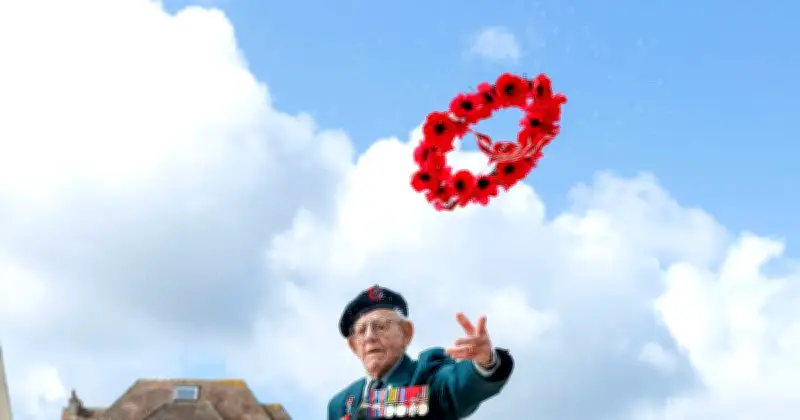
UNESCO has designated 50 miles of French coastline, including the D-Day landing beaches and the British Normandy Memorial, as a World Heritage Site. The protected area now joins an exclusive list that includes the Taj Mahal and the Egyptian Pyramids.
British Normandy Memorial honoured
The site includes the British Normandy Memorial in Ver-sur-Mer, opened by the then Prince Charles on June 6, 2021. The memorial overlooks Gold Beach and was chosen by British WW2 veterans as a place to remember those who fell during the liberation of Nazi-occupied Europe. Recognition came at a special UNESCO session in Busan, South Korea.
Decision coincides with veteran's 101st birthday
The announcement came on the weekend that D-Day veteran Paul Terry celebrated his 101st birthday. Terry, who returned to Normandy with the Express in June for the first time in 82 years, landed on Sword Beach with the King's Royal Rifle Corps. He said: "It was hell on Earth, we were all scared stiff, and at the age I was I just wanted to go home. There was so much noise, so much shelling, it is hard to explain. It frightened the life out of me."
Five landing beaches and the memorial
The World Heritage site covers the five landing beaches - Omaha, Utah, Sword, Gold and Juno - where 156,000 Allied troops stormed ashore. The memorial features 160 limestone columns inscribed with the names of 22,540 servicemen and women from 38 nationalities who died during the invasion and the three-month Battle of Normandy.
Tributes from officials and veterans
General Lord Dannatt, former Chief of the General Staff and Chairman of the Normandy Memorial Trust, said: "The Normandy landing beaches are among the most important historic landscapes in the world. It was here that the liberation of Western Europe began on June 6, 1944, at immense human cost. These beaches are not only places of remembrance for those who served and sacrificed; they are symbols of freedom and shared international heritage."
George Batts, an 18-year-old Royal Engineer on D-Day who later became National Secretary of the Normandy Veterans’ Association, recalled: "No one who landed will ever forget it. As we approached the coast the noise was phenomenal. You’ve got every type of gun going off - and there was like a mist over the whole of the beach." Batts, who helped realise the dream of the memorial, died aged 97 in 2022.




