
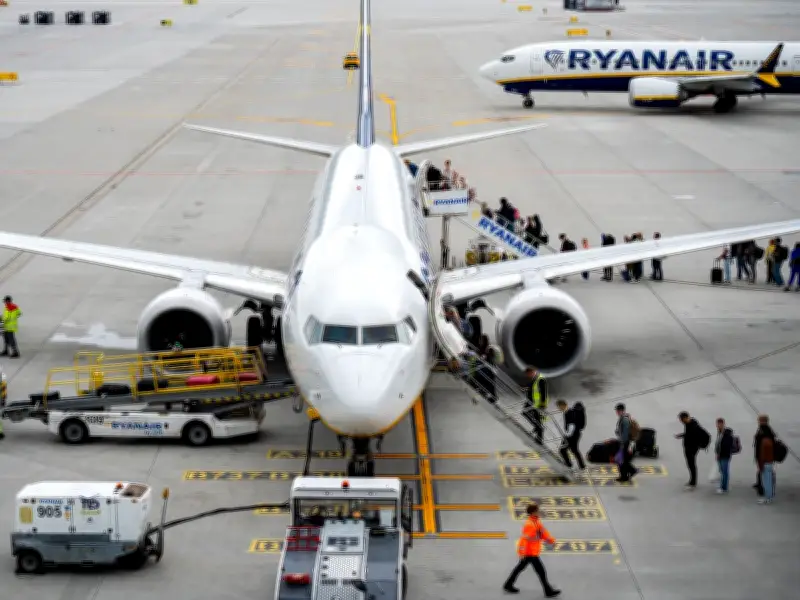
Ryanair, Europe's largest airline group, has issued a major update on how its flights will operate with passengers, sharing a 'fuel update' on social media. The airline posted a video on YouTube titled 'Pathway to net zero carbon emissions goal,' highlighting improvements to flight operations in the coming years.
Key Changes Announced
In the video, Ryanair stated: 'We've developed a pathway to achieve our net-zero carbon emissions goal by 2050, which aligns with the Paris Agreement and the aviation industry's Destination 2050 initiative.' The airline emphasized that its pathway aims to show incremental progress in decarbonizing in line with EU climate targets.
Ryanair highlighted several key areas of change, including the introduction of 210 'game-changer' aircraft that deliver 16% less fuel usage and 40% less noise. The airline also discussed how sustainable aviation fuel (SAF) can reduce lifecycle emissions by 80%, and how measures such as single-engine taxiing and dynamic flight planning can improve efficiency.
Carbon Emission Reduction Targets
According to Ryanair, 32% of its carbon-emission reduction targets will come from technological and operational improvements, 34% from increased use of SAF, 10% from the Single European Sky initiative, and 24% from offsetting and similar measures.
On its website, Ryanair explained: 'We have teamed up with Trinity College Dublin to put in place a number of innovative actions to accelerate the use of sustainable aviation fuel. By appointing best-in-class researchers, we'll achieve our goal of powering 12.5% of our flights with SAF by 2030.'
Destination 2050 Initiative
Destination 2050 describes itself as an industry alliance committed to climate-neutral European aviation. The initiative states: 'We believe that together, policy-makers and the industry can make net zero CO2 emissions happen by 2050. European aviation is committed to play its part and ensure that air transport can continue to grow sustainably in the future.'
By 2030, net CO2 emissions from intra-European flights would be reduced by 55% compared to 1990 levels through fleet renewal, SAF, operational improvements, and the EU Emissions Trading System.
Why CO2 is Harmful
Carbon dioxide is a greenhouse gas that traps heat in the Earth's atmosphere. Human activities have significantly increased CO2 levels, intensifying the greenhouse effect and causing global warming, severe weather events, and ocean acidification. CO2 can linger in the atmosphere for hundreds to thousands of years, with cars and planes among the top contributors to transportation emissions.




