
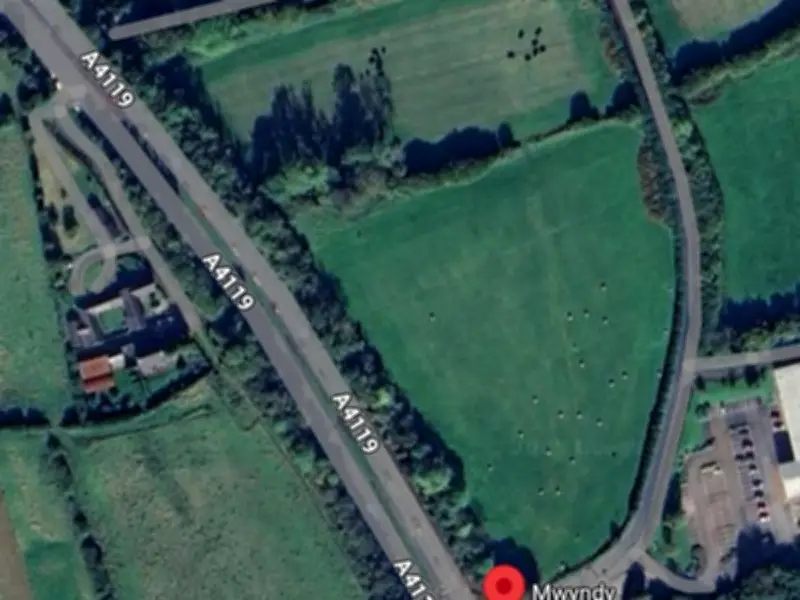
More than 1,000 people have signed a petition opposing the building of a data centre just off the A4119 in south Wales. The plans, submitted to Rhondda Cynon Taf (RCT) Council, propose an 18,220-square-metre data centre over two internal floors plus a 2,260-square-metre adjoining three-storey office block at Mwyndy Cross in RCT. The development also includes associated access, parking, drainage, landscaping, services, and utilities.
Resident Raises Concerns Over Jobs and Local Economy
Resident Lizzie Williams, who started the petition, has raised several concerns about the proposal. She said: “Talbot Green Developments are developers based in Aylesbury owned eventually by a larger company in New Zealand – the money won’t be staying in Wales. Data centres run off skeleton staff, the long-term job prospects are slim, and as AI continues to improve these positions will be needed less and less.”
Williams noted that planning has already been approved for a data centre in a field opposite, though not as large. She cited the developer’s own report: “On average there will be six permanent staff on site which will generate six trips per shift change and there will be two shifts per day, 6am-6pm (day shift) and 6pm-6am (night shift), with occasional visitors and maintenance staff on the site. Allowance has been made for these to be by car however the option for the use of public transport, walking, and cycling are available.”
She added: “The developer has now pulled out but who is to say they won’t sell the land with planning and then we will have two massive data centres and no new employment prospects?”
Impact on Children’s Education and Noise Pollution
Williams also cited the Future Generations of Wales Act, saying: “Building a data centre within 4.5 miles of seven local schools, the closest being 0.6 miles, will significantly impact our children’s education. The noise pollution made by the servers can travel up to five miles and children hear sounds and frequencies that adults cannot. Having to contend with this low humming sound every day will impact the learning of thousands if not tens of thousands of children.”
Energy Costs and Environmental Concerns
She added: “Data centres push the price of electricity up for local people. The energy needed to power this huge data centre will impact our local area substantially.” On the environment, she said: “We all know what putting a giant data centre on green belt land that hasn’t had anything on it for hundreds of years will do to the environment?” Finally, she noted that the site is right next door to a cemetery.
Developer’s Justification and National Demand
The design and access statement submitted with the application says many towns and cities throughout the UK are grappling with the recognised need for data centres. It states: “Although on the face of it the UK doesn’t have a shortage of data centres – there are more than 500 across the country – it is the need for greater and greater capacity in order to keep up with the demands of artificial intelligence (AI) that is in demand.”
It says Google has been reported as saying that the UK is at risk of being left behind in AI without more data centres, in a call that the UK Government has appeared to heed, designating data centres as “critical national infrastructure”. Moreover, analysis of current trends suggests that global demand for data centre capacity could rise at an annual rate of circa 20% between now and 2030, reaching an annual demand of between 170 to 220 gigawatts (GW).
The statement says the available land to the east of Mwyndy Cross, particularly given its inherent infrastructure connectivity, offers an ideal opportunity for the development of such a data centre. It says the application proposals are intended to create employment opportunities of various kinds for the immediate and wider population as well as become a catalyst for further development along Mwyndy Cross.




