
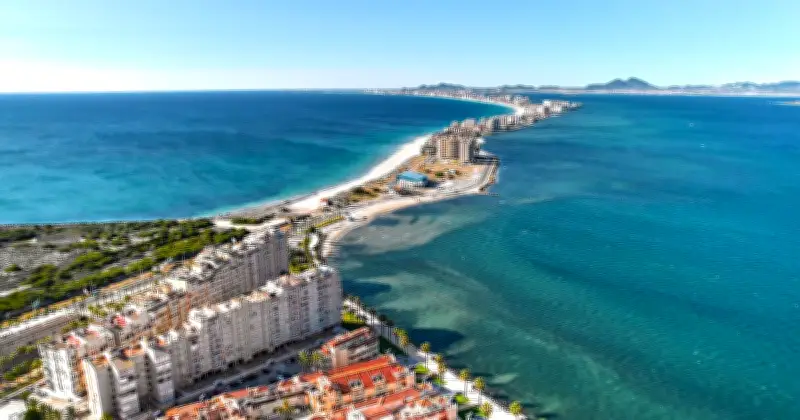
The huge white blob that appeared in the Mar Menor in 2022 now covers five square miles (12.3 square kilometres), roughly 9% of the lagoon, and new research shows it has devastated marine life at its core.
Scientists from the Spanish Institute of Oceanography and the University of Murcia tracked more than 4,000 fish over a year and found an 86% fall in species diversity inside the worst-affected area. The survey recorded just three fish species in the milky patch, compared with 21 thriving species in nearby healthy waters.
Sunlight blocked by turbid water
The findings, published in the journal Marine Pollution Bulletin, show water turbidity has risen to nine times normal levels. That has cut the amount of sunlight reaching the seabed from 18.3% to 3.9%.
Deprived of light, underwater vegetation has disappeared across 2.6 square miles (6.7 square kilometres), eliminating essential feeding and breeding grounds. Only hyper-resilient bottom-feeders such as the black goby now survive in the most damaged zones.
What is causing the white blob?
The discolouration is produced by dense clouds of microscopic calcite crystals, a form of calcium carbonate, suspended in the water. Experts believe groundwater rich in bicarbonate is feeding the phenomenon, driven in part by intensive agricultural irrigation in the surrounding aquifer. Urban wastewater has been ruled out as a direct cause.
The Mar Menor's long ecological decline
The crisis is the latest blow for the Mar Menor, which has suffered years of ecological breakdown, including the notorious 2016 green-soup algal bloom and mass fish suffocations. Scientists are now desperately monitoring the stain to see if the destroyed seabed can ever recover.
Located in the Region of Murcia in southeastern Spain, the Mar Menor is Europe's largest saltwater lagoon, spanning roughly 52 square miles (135 square kilometres). It is separated from the Mediterranean Sea by a 13.6-mile (22-kilometre) sand spit known as La Manga. Historically, its warm, hyper-saline, crystal-clear waters supported diverse ecosystems, including vast meadows of Cymodocea nodosa seagrass, seahorses and rare giant fan mussels.




