
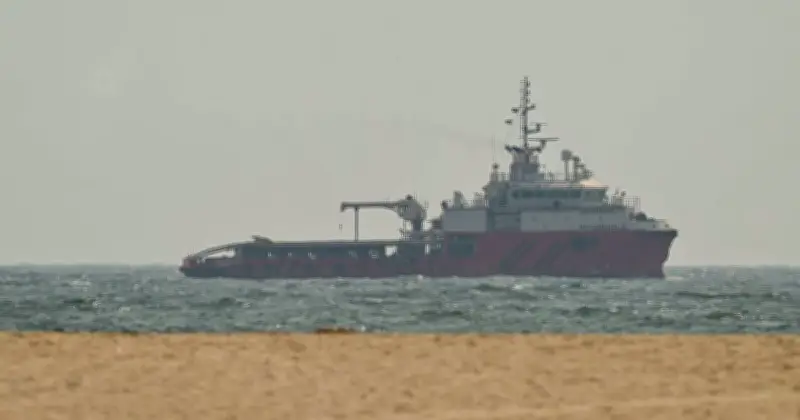
More than 1,500 commercial vessels near the Strait of Hormuz have been stranded for months amid the Middle East conflict, and scientists warn they could trigger an invasive marine "super-spreader event" once shipping lanes reopen.
Since the outbreak of the U.S.-Israel war on Iran five months ago, ships near the strategically vital waterway have been forced to remain stationary. Washington and Tehran remain locked in a struggle over control of the strait, with restrictions on maritime traffic persisting for months.
Biofouling build-up on idle hulls
Groundbreaking research by an international alliance of marine scientists has found that invasive marine microbes, algae and invertebrates have accumulated on the hulls of the idle vessels.
"If you had to sort of design a worst-case scenario, it would look a lot like this," said Mario Tamburri, a professor at the University of Maryland Center for Environmental Science and one of the study's lead authors. "It's a perfect storm."
The findings point to "significant environmental risks," including the proliferation of invasive species. As the stranded vessels re-enter global shipping routes, experts have raised alarm over the prospect of a "large-scale, marine bioinvasion 'superspreader' event."
Unparalleled disruption and possible consequences
The consequences could include native species being outcompeted, damage to marine infrastructure, and the introduction of pathogens harmful to sea life and, in some cases, humans.
Scientists argue the current situation is "unparalleled" in modern history, with no previous shipping disruption having left such a vast number of vessels idle for such an extended period. Before the conflict, most vessels in the area would spend between one and three days in port; now ships have remained stranded for months, more than enough time for "biofouling" - the unwanted accumulation of marine organisms on a vessel's hull.
The build-up of waterborne organisms can reach a "rapid growth phase" after approximately 10 days, according to researchers. Compounding the threat, the vessels have sat idle at the onset of spring, when warmer waters actively promote growth and reproduction.
Cleaning urged but challenging
Researchers are urging shipping companies to carry out in-water cleaning operations to eliminate the build-up, citing global ecosystem risks and increased fuel expenditure. However, this remains unlikely for the majority of vessels, "given the urgency of evacuating stranded seafarers and restoring shipping movements," the study notes.
Key challenges include limited capacity and operational restrictions in cleaning hundreds of large commercial vessels, coupled with insufficient resources to undertake large-scale operations.
Researchers advise crews to assess the accumulation of marine organisms before departure and recommend that neighbouring ports monitor for early signs using low-cost, rapid evaluations, enabling authorities to properly gauge the risks involved.
"While the human and economic consequences of events like the war in the Middle East will always remain the highest priority, ecological impacts cannot be overlooked," the study says.




