
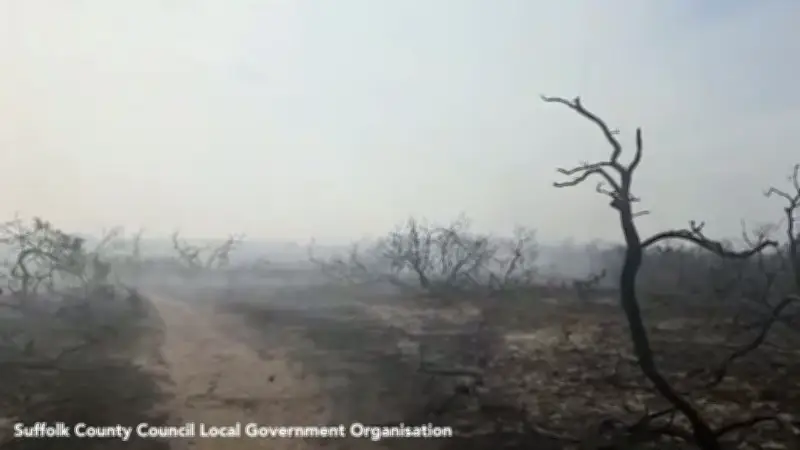
Hundreds of wildfires across the UK have devastated rare wildlife habitats that conservationists say could take 25 years to recover. Crews have responded to grassland fires from Snowdonia National Park in North Wales to Suffolk after the driest July in England and Wales since records began.
Cooler temperatures forecast for many parts of the UK may ease the pressure on firefighters. But the respite comes after a month described by the Met Office as an "exceptional combination of extreme heat, abundant sunshine and an almost complete absence of rainfall." Campaigners and government ministers have warned that extreme weather could become the "new normal" due to global warming.
Recovery may take 25 years
In Sychnant Pass, North Wales, hundreds of acres of land were destroyed last month. A major incident was declared after flames on Conwy Mountain forced the evacuation of 36 homes on July 12. Much of the pass lies within Snowdonia National Park, where large areas are designated a Site of Special Scientific Interest.
North Wales Fire and Rescue Service urged the public to stay away from affected areas, adding: "We continue to urge the public to stay away from affected areas as we are aware of people travelling to wildfire locations to take aerial photographs and videos. Mountain rescue colleagues have reported an increase in visitors to affected areas with the intention of 'wild camping.' This is not only dangerous but places an additional strain on resources and can hinder firefighting and emergency access. Please avoid using disposable barbecues, ensure cigarettes are fully extinguished, take litter home and never leave glass bottles behind, as these can increase the risk of wildfire."
Driest July on record
Provisional statistics show only 5.6mm of rain fell in England in July, less than half the previous record low of 13.4mm set in 1911. Wales saw 7.9mm, almost a third of its previous record of 22.6mm. The conditions have left much of England and Wales in drought, with more than 20 million people under hosepipe bans after drought was declared across large parts of England and all of Wales.
Suffolk heath blaze
The worst blaze hit Dunwich Heath in Suffolk, which firefighters brought under control. The 371-acre fire, three miles from the Sizewell B nuclear power plant, began at the nearby RSPB Minsmere wetland reserve at 5.30pm on Wednesday. National Trust director-general Hilary McGrady described the loss of an important habitat for some of the UK's rarest species as "devastating."
Adam Rowlands, RSPB area manager in Suffolk, told the BBC that the habitats devastated by the "utterly sickening" fire could take up to 25 years to recover. "The acrid smell, it's not just smoke, you have a sense that animals have perished in the flames," he said.
Farming pressure
The drought has placed all areas of farming under increasing pressure. NFU President Tom Bradshaw said wheat and oat yields were "very, very poor" this year, and livestock farmers have had to use their winter feed rations because they could not grow grass. Vegetable producers are running low on water, which reduces the amount of food produced in the UK and increases the cost of growing it.
"We can't change what's happening at the moment, there is no water in our rivers, but we must use this to take action for the future," Bradshaw told the BBC. "We have to recognise that water security is a critical part of our food security and food security is our national security." He said more reservoirs are needed, as water collected during winter is pumped out into the North Sea, and suggested farmers should be given tax breaks to build water storage systems. "We have taken our food supply for granted for far too long. The climates of those other countries around the world that we currently rely on to produce our food and vegetables are changing as well. It does feel like there is going to be some shortage of food products," he warned.
Heat alerts
Amber heat health alerts remain in place across large parts of England. The UK Health Security Agency has issued amber alerts for the East Midlands, East of England, London and the south-east until 9am on Wednesday, August 5, with yellow alerts for the North West, Yorkshire, West Midlands and the South West for the same period.




