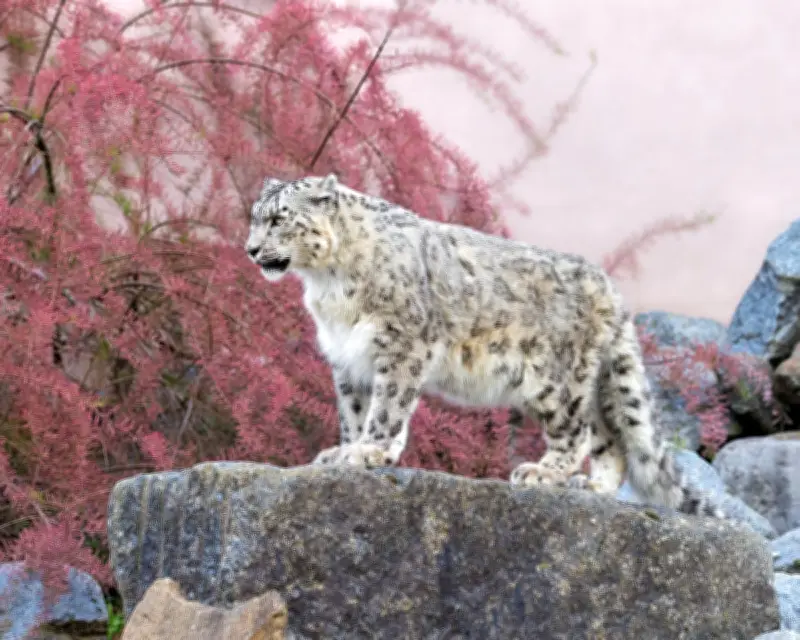
Kulbhushansingh Suryawanshi's first book, The Ghost of the Mountains, provides a compelling and intimate look at the elusive snow leopard, a species often misunderstood and endangered in an increasingly hostile, crowded, and hot environment. An Indian conservationist and mountaineer, Suryawanshi pursues the creature through the Himalayas and Gobi desert, offering a gritty and detailed portrait.
From Aurangabad to the High Ranges
Suryawanshi grew up in Aurangabad in the Deccan Peninsula, far from the snow leopard's habitat, and decided to pursue ecology after reading biologist George Schaller's The Year of the Gorilla in the city's public library. He admires western conservationists, mountaineers, and explorers—Schaller, Reinhold Messner, and British imperial adventurer Francis Younghusband—yet he is an Indian writer writing about the ecology of his own country. As much as his book is about snow leopards, it also asks us to consider their biographers: who gets to tell the story of the nonhuman lives around us?
Adaptations and Misconceptions
Despite its name, the snow leopard has little in common with the leopard; its closest living relative is the tiger. Adapted to harsh, rugged terrain from India to Russia, it has an absurdly bushy tail used as both extra limb and voluminous shawl, and large paws that act like snow shoes. Lacking a particularly strong bite, it compensates with agility and guile, chasing prey down steep cliff faces and driving horses into deep snow. They are extremely difficult to spot; Suryawanshi observes that their "ochre-and-dust-colour coat with its irregular rosettes looks exactly like a rock covered with lichens," suggesting they should really be called "rock leopards."
A Conservationist's Diary
Suryawanshi's book differs from quest narratives of writers like Peter Matthiessen or Sylvain Tesson. Shorn of romance, it recounts the grind of observing and counting snow leopards in remote parts of the world, far from his wife and young daughter. He wades through snow, sets up camera traps, and tries to defuse tensions with local herders. His snow leopards are part of an ecosystem, hated and loved, as well as objects of indifference.
Conflict and Coexistence
Although snow leopards prefer wild animals, up to 70% of their diet is livestock, a recipe for conflict with local people. One herder in the Spiti Valley nonchalantly related that he shot a snow leopard after it attacked his goats and dumped its corpse in a river. Yet others speak fondly of the cats: a community in Kibber adopted and fed a sick snow leopard, naming him Rancho after a Bollywood character.
Suryawanshi's work mediates conflict between cats and locals. He assists in designing livestock enclosures that deter hungry snow leopards and recommends compensation schemes for herders. He notes that women are most hostile to snow leopards, as they look after livestock and do not necessarily benefit from compensation schemes. One local woman asks: "why don't you marry one of your snow leopards?"
Conservation Controversy
The most painful section relates to the bitter dispute over the IUCN's 2017 decision to downgrade the snow leopard from "endangered" to "vulnerable." Suryawanshi and his colleagues at the Snow Leopard Trust bitterly opposed the move, arguing it was based on flawed science and driven by political considerations of large western NGOs. In his eyes, "racial power dynamics and colonial legacies of conservation and research" were at play. Today, the snow leopard is still classed as vulnerable.
Stripping Away Mystification
Suryawanshi critiques the stories told about the snow leopard, attempting to wrest it back from literary and metropolitan writers. Retracing Matthiessen's steps in Nepal, he notices the effects of mass tourism and learns that Nepal's richest man, who owns an instant noodle company, sought to build a resort for tourists hoping to spot snow leopards. He gently swipes at Matthiessen, asking if the American writer ever considered the consequences of mythologizing the creature.
While it may be a stretch to blame Matthiessen for the snow leopard's plight, Suryawanshi's point is that stories matter: the snow leopard has become a commodity like Everest. The effect of this book is a gradual stripping away of mystification, revealing the snow leopard as fragile and beautiful, no less wondrous for it, and no less deserving of our attention and respect.