Community Vigilantes Take On Illegal Mining Crisis
In the remote western regions of Ghana, an extraordinary grassroots movement has emerged to combat the growing scourge of illegal gold mining. Ordinary citizens including priests, farmers and local residents now patrol forests weekly, searching for signs of destructive mining operations that have contaminated vital water sources across one of the world's largest gold-producing nations.
The group, known as the Jema Anti-Galamsey Advocacy, comprises 14 dedicated members who have taken environmental protection into their own hands. Their mission began a year ago, driven by witnessing Ghana's unemployed youth being lured into illegal mining by promises of quick wealth, while the nation's economy suffers staggering losses.
Economic and Environmental Catastrophe
According to development nonprofit Swissaid, Ghana has suffered devastating economic damage from gold smuggling, with losses reaching $11.4 billion over the past five years. The situation has been exacerbated by Ghana's economic collapse following the COVID-19 pandemic, which saw inflation hit a 21-year high exceeding 50%.
Government statistics reveal nearly 39% of Ghanaian youth are unemployed, pushing thousands toward illegal mining operations. The environmental consequences have been equally severe, with cyanide and mercury contamination affecting significant portions of Ghana's water bodies.
Recent data from the Ministry of Lands and Natural Resources shows illegal miners have infiltrated 44 of Ghana's 288 forest reserves as of January 2024, with nine reserves described as completely controlled by armed groups.
Local Resistance Against National Crisis
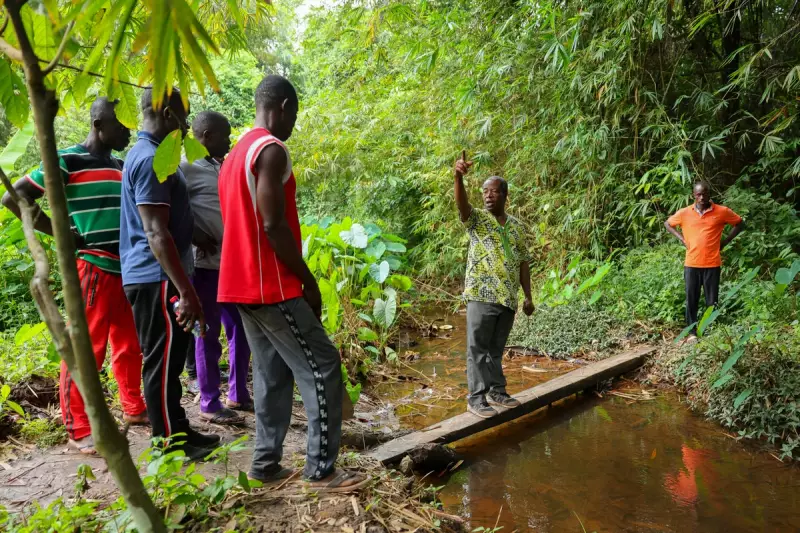
The Jema community of approximately 15,000 people has enforced a complete ban on mining since 2015, exercising legal rights that empower local chiefs to establish and enforce customary law. The community task force typically patrols water bodies and the Jema Forest Reserve at least once weekly, armed only with sticks rather than firearms.
Joseph Blay, a Catholic priest and Jema resident who helped establish the task force, emphasised their achievements: "All our water bodies that take their source here are clean because of our strong resistance to galamsey. If we stop fighting, we will lose everything."
The patrols monitor water colour changes indicating upstream mining activity and watch for new forest clearings. When villagers provide tip-offs, the group arrests suspects and transfers them to district police, operating under laws permitting citizen arrests in specific circumstances.
Their efforts have yielded results, with the arrest of two Nigerien nationals caught attempting to mine gold in the forest. However, court proceedings have progressed slowly, prompting calls for special courts dedicated to trying illegal miners.
National Response and Local Tensions
The grassroots initiative emerges against a backdrop of national concern. Last year saw widespread protests across Ghana demanding government action against illegal mining. President John Mahama, who took office in January, has established a national task force but rejected calls for a state of emergency, maintaining that alternative approaches haven't been exhausted.
Daryl Bosu, deputy national director for conservation nonprofit A Rocha Ghana, suggests the government's limited success indicates insufficient political will to address the crisis effectively.
However, the community approach faces its own challenges. Festus Kofi Aubyn, a regional coordinator with the West Africa Network for Peacebuilding, warns that "if the task force is not properly regulated by the state, it could have dangerous consequences, including ethnic targeting or stereotyping."
Internal community divisions have also emerged. Some residents oppose the task force, preferring to collaborate with miners for financial gain. One anonymous 27-year-old resident expressed willingness to sell land to miners, citing unprofitable farming conditions with fertilizer prices tripling since 2022.
Local leaders acknowledge that declining agricultural income and limited employment opportunities could undermine community enforcement of the mining ban. Residents advocate for investment in alternative livelihoods to reduce illegal mining's appeal.
Father Blay proposes transforming the Jema Forest Reserve into a tourism park to create sustainable employment. He suggests the Jema model could be replicated elsewhere if the government demonstrates serious commitment: "If the government is really serious to fight, we can use the Jema template to also diffuse it in other communities."
Despite death threats and inherent dangers in their unarmed patrols, task force members like Patrick Fome remain committed. Noting the Ehole River's concerning transformation to a milky brown colour indicating upstream mining activity, Fome emphasises their critical role: "We cannot go there now without adequate preparation. We sometimes receive death threats."