
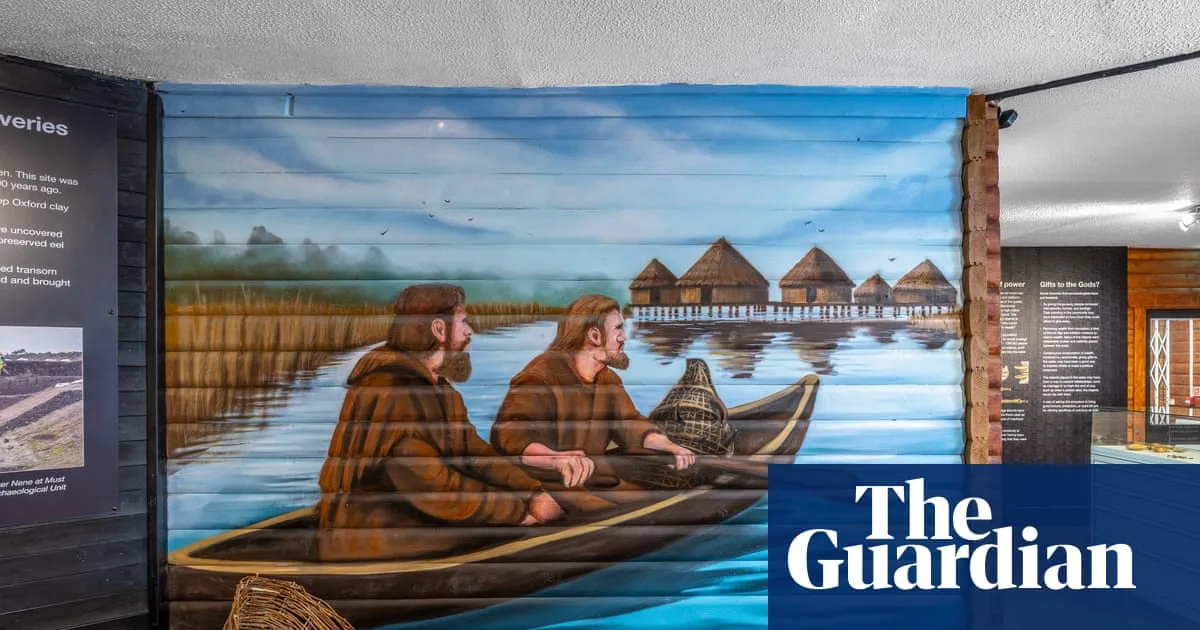
Three rare bronze and iron age log boats, dating back up to 3,500 years, have gone on public display for the first time in Peterborough. The vessels were among nine discovered in a Cambridgeshire quarry 13 years ago, the largest such find in a single UK site.
The boats, made from oak and maple, were excavated from an ancient silted-up creek at Must Farm near Whittlesey. Archaeologists say they provide valuable insights into prehistoric carpentry, construction techniques, and transportation methods. Analysis has identified the tree species used, felling methods, and tools employed in their creation.
Three boats are now on permanent display at Flag Fen archaeology park. They include a 6.3-metre middle-bronze age oak vessel with charring inside, a 2.2-metre fragment of a middle-bronze age oak boat with an intricate hull repair, and a 0.8-metre fragment of an early bronze age boat made of field maple.
Iona Robinson Zeki, a researcher at Cambridge Archaeological Unit, described the find as 'amazing'. She noted that the boats were used to navigate a fenland river for almost a millennium, for fishing and transporting people, animals, and materials. Over time, rising groundwater levels turned the area into swamp, making boats the main mode of transport.
The conservation project, funded by Forterra, Historic England, and Peterborough city council, involved preserving the boats in climate-controlled conditions using a specialised wax and water solution. The remaining six boats are still being conserved at a specialist facility at Flag Fen.




