
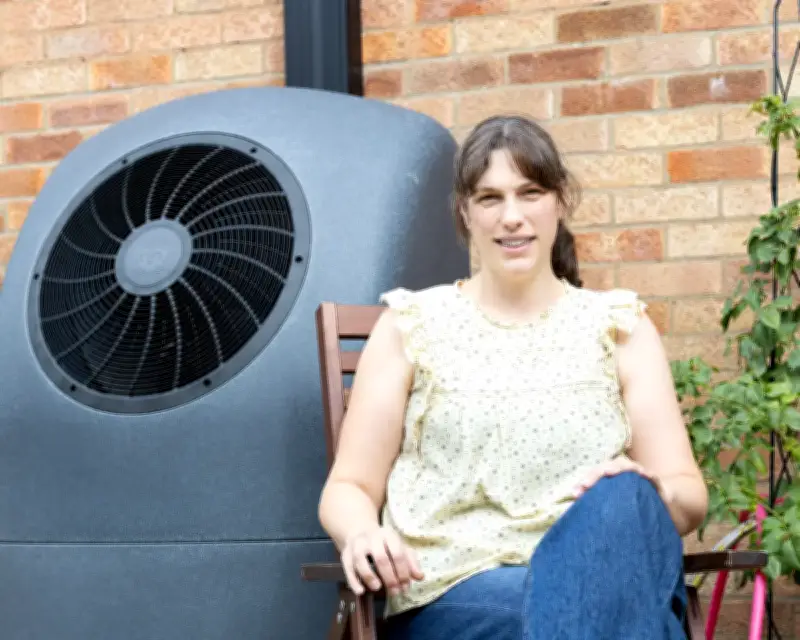
Clare Naylor's four-bedroom detached home in Milton Keynes has been retrofitted with a heat pump, 17 solar panels, and a large battery, guaranteeing she will not receive an energy bill for five years. This comes as millions of British households face the highest energy charges in three years after a 4% rise in the price cap, with predictions of a 16% increase in January.
How the home generates its own energy
The house, built in the 1980s, now acts like a mini-power station, feeding excess energy back to the grid. The new technology, along with four new radiators, allows the family to use Octopus Energy's "Zero Bills" tariff, which guarantees no bills for five years as long as they stay within a "fair usage" limit.
Naylor previously managed energy use carefully, with heating set to only 18C and using slippers, hot-water bottles, and jumpers to get through winter. This year, she says she will heat the house before the children come home from school, something that did not used to happen. The family's energy bills were about £130 a month, a sum they now plan to spend on holidays.
Retrofitting project and costs
The retrofitting was done for free by Santander as part of a project to examine funding for home energy efficiency. If Naylor had paid for the works, the solar panels, heat pump, and battery would have cost just under £20,000 after a government grant. The "Zero Bills" tariff has been operating in hundreds of new-build homes since its launch five years ago, and the company is now testing it in older retrofitted homes.
Properties must have good insulation, solar panels, a heat pump, and a battery to qualify, generating more energy than used. "Typically the homes generate slightly more energy over a year than we'd expect them to use," said Nigel Banks, technical director of Zero Bills at Octopus Energy. "One of the fundamental requirements is we need to make enough revenues from selling power back to the grid."
Qualifying and future plans
Homes must have no gas, even for cooking, so the Naylors had their gas boiler removed. The zero-bill promise does not cover electric vehicle charging. Banks noted that the best candidates are homes built in the last 10 years with good insulation, with usage caps set individually based on normal energy use plus a margin.
Santander is working on financing options for households needing loans for retrofits. Its home improvement loan, at 6.4% interest over five years, would mean repaying £389 a month for a £20,000 project. Mick Taylor from Santander said: "We've got a big challenge. We've got 1.5m mortgage accounts and the vast majority of those are paying monthly energy bills. Consumers are concerned that energy bills are only going one way – they're probably the second- or third-biggest outgoing for most households."
Naylor says she will try to keep the home at a constant warm temperature this winter, adding, "And then train my children to keep the door shut, which will be fun."




