A Decade of Unfulfilled Promises
Ten years after world leaders triumphantly sealed the historic Paris Agreement, the planet's climate trajectory has veered dramatically off course. While the pact set a crucial path to slow global warming, the world has failed to stay on it. Scientists and officials now deliver a sobering assessment: the climate is changing more rapidly than society is managing to abandon the fossil fuels causing the crisis.
Earth's climate has become nastier, faster, than anticipated. Since 2015, the annual global temperature has surged by approximately 0.46 degrees Celsius (0.83 degrees Fahrenheit), one of the largest decadal jumps ever recorded. Each year since the agreement has been hotter than the year it was signed, with 2025 on track to be the second or third hottest year on record.
Accelerating Impacts and Widespread Damage
The symptoms of this accelerated warming are now impossible to ignore. Deadly heatwaves have scorched not only traditional hotspots like India and the Middle East but also temperate regions such as the Pacific Northwest and Siberia. The planet has been repeatedly battered by more frequent, costly, and dangerous extreme weather events.
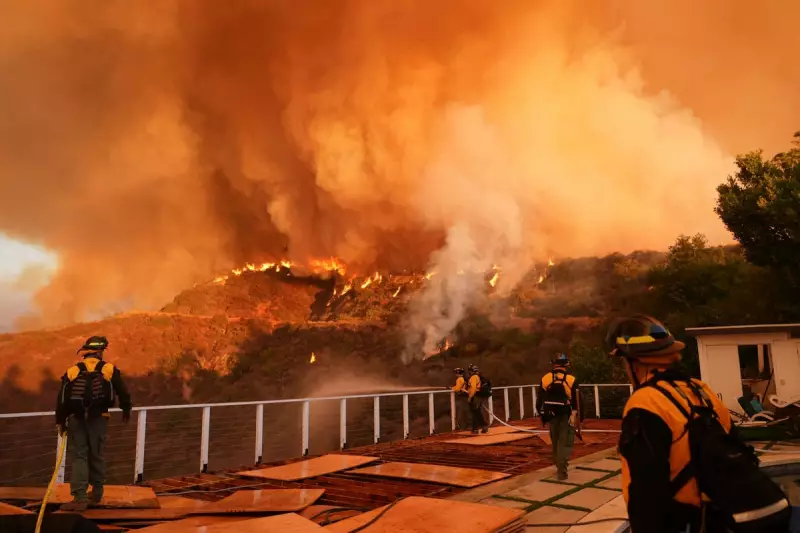
The past decade has witnessed the most Category 5 Atlantic hurricanes and the highest number of billion-dollar weather disasters in United States history. America alone has endured 193 disasters costing at least $1 billion, totalling a staggering $1.5 trillion in damages. Wildfires have ravaged Hawaii, California, Europe, and Australia, while catastrophic floods have devastated Pakistan, China, and the American South.
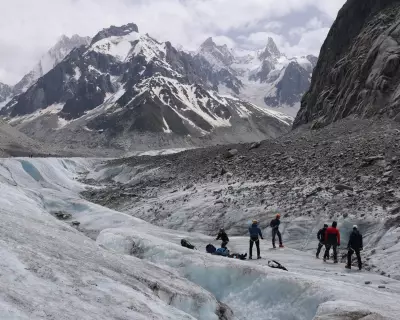
The cryosphere has suffered profoundly. Scientists calculate that more than 7 trillion tons of ice from global glaciers and the ice sheets of Greenland and Antarctica have vanished since 2015. This immense loss is equivalent to over 19 million Empire State Buildings in weight. Consequently, sea level rise is accelerating, with oceans rising 40 millimetres (1.6 inches) in the past decade—enough water to fill 30 lakes the size of Lake Erie.
Even the Amazon rainforest, the location for the upcoming UN climate negotiations in Belem, Brazil, has at times transitioned from a vital carbon sink to a source of heat-trapping gases due to rampant deforestation.
Progress Made, But Not Nearly Enough
Despite the grim outlook, there are significant achievements to acknowledge. The cost of renewable energy has plummeted, making it cheaper than polluting coal, oil, and natural gas in most places. In 2024, a remarkable 74% of new global electricity generation came from wind, solar, and other green sources. The electric vehicle revolution is also underway, with global sales exploding from 500,000 in 2015 to 17 million last year.
This clean energy surge has had a tangible impact on future projections. In 2015, the world was on a path for nearly 4 degrees Celsius (7.2 degrees Fahrenheit) of warming since pre-industrial times. Current pledges have reduced that trajectory to approximately 2.8 degrees Celsius (5 degrees Fahrenheit).
However, this progress remains dangerously insufficient. It falls far short of the Paris Agreement's overarching goal of limiting warming to 1.5 degrees Celsius (2.7 degrees Fahrenheit), a threshold scientists identify as a critical danger line. A comprehensive report found that none of the dozens of key transition indicators are on pace to meet the 1.5-degree target.
Pollution continues to grow. Levels of methane in the atmosphere have increased by 5.2% since 2015, while carbon dioxide levels have jumped 5.8%. While some developed nations, including the US, have reduced emissions by around 7%, others have seen dramatic increases: China's emissions are up 15.5% and India's have soared by 26.7%.
As diplomats gather in Belem for the latest round of UN climate talks, the message from experts is starkly clear. The world has made notable strides in the right direction, but the pace of action is still being catastrophically outpaced by the acceleration of climate change itself. The gap between where we are and where we need to be is not closing—it is widening.