
The 2026 World Cup, co-hosted by the US, Mexico, and Canada, may offer a unique opportunity for the United States to showcase a more connected and human-scale identity, countering its recent reputation for isolationism and divisiveness, according to a commentary by Barney Ronay in the Guardian.
The Rocky Statue and the American Dream of Hand-Sized Scale
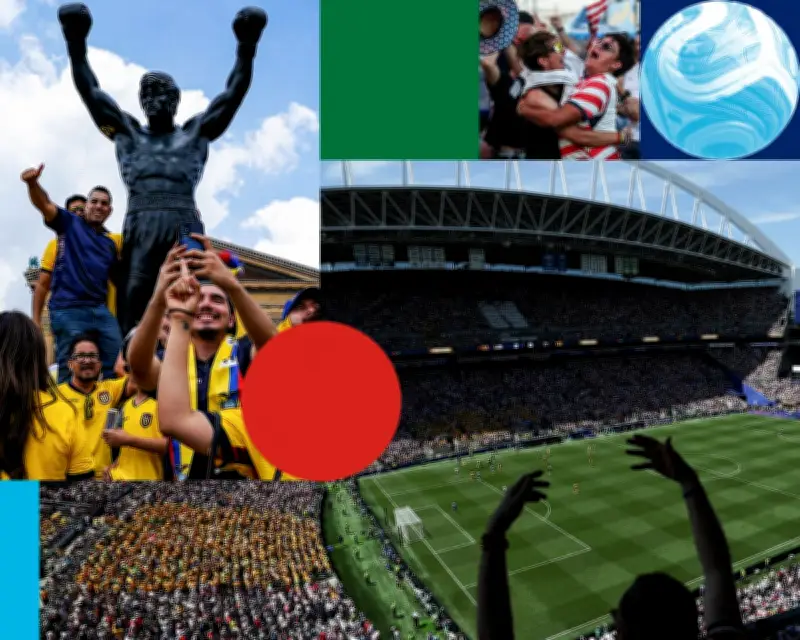
In Philadelphia, the Rocky statue remains a powerful symbol of American self-mythology, representing the idea that the vast and brutal land can be reduced to human scale. Ronay argues that many iconic American creations—the hamburger, the .45 Colt, the baseball mitt, the chocolate chip cookie—are designed to fit the hand, embodying a democratizing and scalable dream. However, he notes this dream is deceptive, as the US is also a violently stratified place built on slavery and economic colonialism.
Ronay suggests that the US began to lose its cultural connection when it abandoned this hand-sized scale, producing oversized food and shifting to a limbless digital space controlled by tech gods. He warns that the end of the US may not come from political revolution but from choking on a basketball-sized M&M in a self-driving car, while an AI president tosses a virtual football.
World Cup Success on Its Own Terms
The World Cup, 11 days in, has shown both positives and negatives. Bad aspects include the mid-half advert break, the posturing of FIFA President Gianni Infantino, and fawning over irrelevant celebrities. Good aspects include American cities and stadiums, a warm diaspora feel, and breezy, fun games. However, the tournament's real purpose is financial: to make $14 billion (£10.6 billion) from marketing 300 hours of television content, to reach into the world's greatest leisure market, and to shore up Infantino's war chest.
This World Cup has always been about the US and the question of what it is: still the world's most powerful cultural and economic force, but newly hostile and inward-facing. Ronay observes that traveling across the country from California to Texas to New York reveals an unexpected possibility: maybe the World Cup will bring the best out of the United States, not the worst.
The US as a Target of Global Hatred
Ronay notes that many people around the world reflexively despise the US, viewing it as a frightening and hateful entity. He cites fact-based reasons: the US entered the World Cup having recently murdered the head of state of Iran (second-ranked team in Group G), offered support for a conflict in Palestine, and the Trump administration is toying with crashing the world economy. Even the World Cup itself is an act of economic violence, priced out of sensible human scale.
However, Ronay argues that hating the US as a single entity is confusing. The US is a hugely diverse nation of 350 million people with more than 100 significant immigrant cultural groups. He points out that while 77 million people voted for Trump, 272 million did not. The US is not Trump; it is a great human experiment with all its freedoms and flaws.
The Power of Real-World Connection
The World Cup provides a reminder of other things: meeting people in real space is an act of revolutionary dissent against the loss of scale. Ronay reports that the reception from everyday people has been warm, and many Americans want to talk about how their country is viewed, apologizing and raging against Trump's isolationism.
He highlights examples like the diaspora teams of Curaçao and Cape Verde, which model the opposite of separation and division. The match between Egypt and Iran in Seattle on the Friday of the city's Pride celebration is a powerful example: two nations where diverse sexuality is illegal will confront the reality of a Pride event, showing the best of sport—making people confront each other in the real world.
Football as a Hand Mirror
Ronay concludes that football isn't going to unite the world, but it may hold up a useful hand mirror. The World Cup provides a model of the best of what the US is supposed to be: a place on the human scale, an idea that fits into your hand. Feeling hatred for this place, like hating anywhere else, is to fall into the trap of those who weaponize it.




