Wood Burner Health Debate Intensifies Amid Clean Air Night Awareness
Households across Britain may be feeling a twinge of discomfort as they cosy up by their wood-burning stoves during the January chill, coinciding with environmental campaign groups marking their annual Clean Air Night. This initiative, led by the charity Global Action Plan, aims to raise awareness about the toxic smoke produced by burning wood, which can be inhaled deep into the lungs, posing significant health risks.
Research Highlights Dangers of Wood Smoke Emissions
Independent studies indicate that wood smoke contains fine particulate matter known as PM2.5. These tiny particles can infiltrate the bloodstream, causing irritation and inflammation linked to serious conditions such as heart disease, lung disease, stroke, cancer, and dementia. The impact extends beyond the home, affecting outdoor air quality if PM2.5 levels accumulate.
In 2022, a report by Sir Chris Whitty, then Chief Medical Officer, revealed that even the most modern wood burners emit 450 times more toxic air pollution than gas central heating. Further research from Action For Clean Air in October suggested that reducing non-essential wood burning could save the NHS over £54 million annually and prevent thousands of deaths.

Regulatory Crackdown and Industry Pushback
The regulatory environment is tightening, with cities like London, Bristol, Bath, Nottingham, Coventry, Oxford, and Reading implementing Smoke Control Areas. Residents in these zones face fines for burning wood indoors. However, the wood burner industry is defending itself, arguing that this popular heating method is being unfairly targeted. Critics claim health risks are exaggerated and accuse the nanny state of undermining a cherished source of comfort.
Comparative Household PM2.5 Sources Unveiled
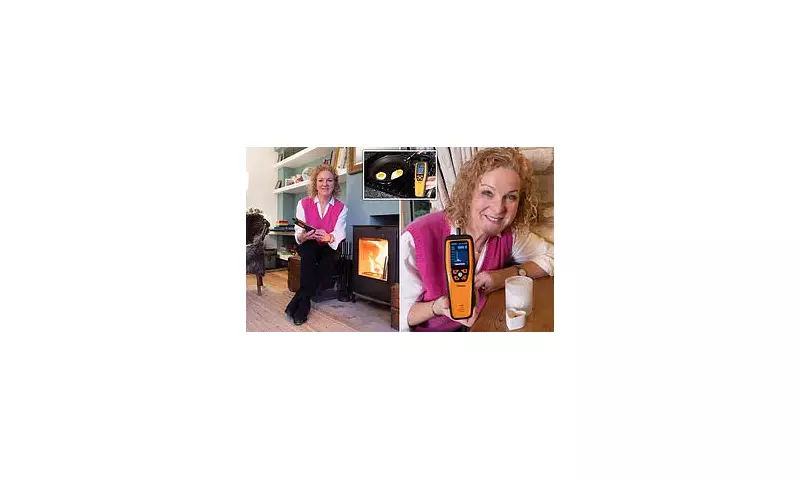
To investigate the issue, Louise Atkinson purchased a device to monitor PM2.5 emissions in her home. Her findings were startling: cooking activities generated significant spikes. For instance, frying eggs elevated PM2.5 levels to 109.6, while burning toast caused readings to soar to 999.9. Similarly, scented candles produced hazardous levels, peaking at 594.22 when nearby.
Angus Muir, owner of Firefly London, demonstrated that his modern wood burner recorded a PM2.5 reading of 9.7 micrograms per cubic meter, classified as clean air by the World Health Organisation. In contrast, cooking bolognese sauce on a gas hob registered a hazardous 971.5, questioning the relative harm of wood burners versus everyday kitchen activities.
Expert Insights on Exposure and Mitigation
Respiratory immunologist Dr Ross Walton emphasised that while wood smoke can cause irritation and damage, prolonged exposure is the primary concern. He noted that vulnerable groups, such as the elderly and young children, are at higher risk, but even healthy individuals may be affected during recovery from illnesses like colds.
Dr Walton advised that risks can be mitigated by using wood burners properly and considering household members' health. He also highlighted that brief PM2.5 spikes from cooking or candles, while irritating, are less dangerous than sustained exposure, which can lead to cumulative health issues over time.

Practical Steps to Reduce Emissions
- Upgrade to eco-design wood burners manufactured after 2017, which can reduce particulate emissions by up to 80%.
- Ensure professional installation and regular maintenance to prevent efficiency losses and emission leaks.
- Schedule annual chimney sweeping to avoid incomplete combustion and increased smoke output.
- Burn only seasoned logs with moisture content below 20% to minimise harmful particles.
- Employ the top-down firelighting method and keep the stove door closed to reduce emission spikes.
Conclusion: Balancing Comfort and Health
The debate over wood burners is complex, with evidence showing that household activities like cooking and using scented candles can produce comparable or higher PM2.5 levels. While modern, well-maintained stoves may operate within safe limits, factors such as appliance age, chimney condition, and fuel quality significantly influence emissions. Ultimately, informed usage and consideration of indoor air quality are key to enjoying wood burners without compromising health.