
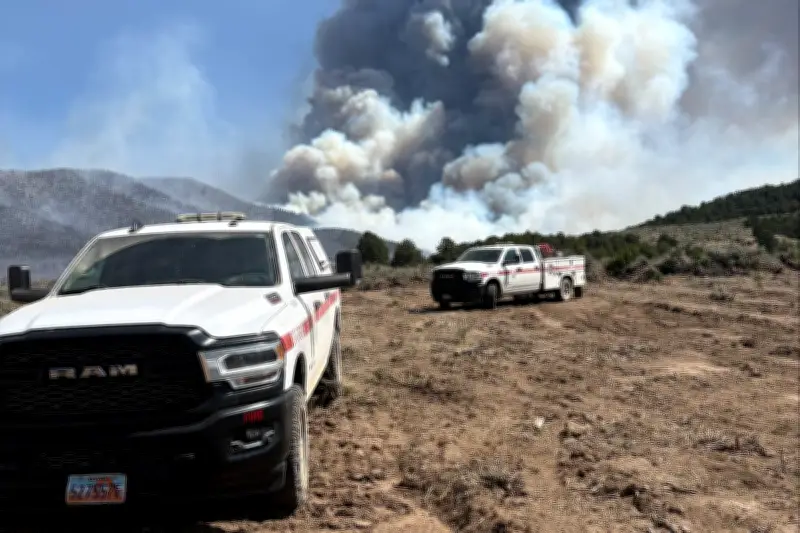
A rapidly spreading wildfire in Utah has forced the evacuation of hundreds of homes as the state grapples with an extreme heat wave that has shattered temperature records. The fire, which began on Monday afternoon near the town of Tooele, has already scorched over 2,000 acres and is threatening thousands of structures, according to local authorities.
Evacuations and Emergency Response
Mandatory evacuation orders were issued for approximately 1,500 residences in the Lake Point and Erda areas, west of Salt Lake City. The Utah Division of Emergency Management confirmed that shelters have been set up at nearby schools for displaced residents. Fire crews from multiple agencies are battling the blaze, aided by air tankers and helicopters, though extreme heat and low humidity are hampering containment efforts.
“This fire is moving at an alarming rate due to the unprecedented heat and dry conditions,” said Utah Fire Marshal John Smith. “We are urging all residents in the evacuation zone to leave immediately and follow instructions from emergency personnel.”
Record-Breaking Heat Wave
The wildfire coincides with a severe heat wave affecting the western United States. In Utah, temperatures soared to 112°F (44.4°C) in Salt Lake City on Monday, breaking the previous record of 107°F set in 2016. The National Weather Service has issued excessive heat warnings for much of the state, with temperatures expected to remain above 105°F for the next several days.
According to climatologists, the heat wave is linked to a high-pressure ridge parked over the region, which is trapping hot air and preventing cooling. “This event is consistent with the long-term warming trend driven by climate change,” said Dr. Emily Chen, a climate scientist at the University of Utah. “Extreme heat events are becoming more frequent and intense, increasing the risk of wildfires.”
Impact on Communities and Infrastructure
The wildfire has already destroyed at least five structures, and officials warn that the number could rise as assessments continue. Power outages have been reported in affected areas as utility companies shut off lines to prevent additional fires. The Utah Department of Transportation has closed several highways, including a stretch of Interstate 80, due to smoke and fire activity.
Local schools have been closed, and outdoor events canceled. Health officials are advising residents to stay indoors, use air conditioning, and check on vulnerable neighbors. The state has opened cooling centers in Salt Lake City, Provo, and Ogden.
Firefighting Efforts and Challenges
More than 500 firefighters are on the scene, including crews from neighboring states. However, the extreme heat is taking a toll on personnel. “Our firefighters are working in brutal conditions,” said Chief Sarah Johnson of the Tooele County Fire Department. “We are rotating crews frequently to prevent heat-related illnesses.”
The fire is currently 0% contained, and officials expect containment to take several weeks. Wind gusts of up to 30 mph are forecast, which could further spread the flames. Red flag warnings remain in effect across the region.
Broader Context and Climate Concerns
The Utah wildfire is part of a larger pattern of extreme weather events across the West. California, Nevada, and Arizona are also experiencing record heat, with multiple wildfires burning in each state. Scientists warn that the combination of prolonged drought, high temperatures, and dry vegetation is creating ideal conditions for catastrophic fires.
“This is a stark reminder that we need to adapt to a changing climate,” said Governor Spencer Cox in a press briefing. “We are doing everything we can to protect lives and property, but these events are becoming more challenging to manage.”
As of Tuesday morning, the fire remains active, and evacuation orders are still in place. Residents are urged to monitor local alerts and prepare for extended displacement.




