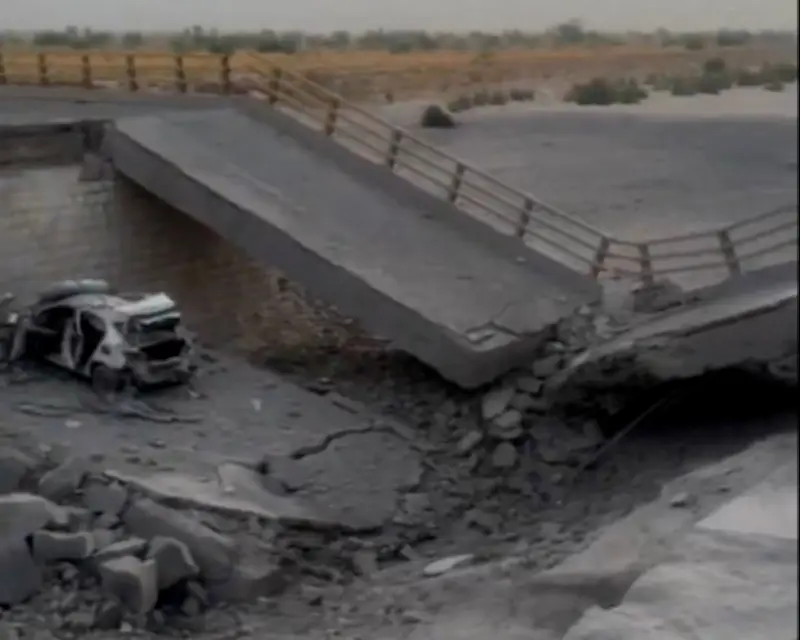
US airstrikes on Friday targeted bridges, energy facilities, and a key port in Iran, killing at least seven people in Hormozgan province, according to Iranian state TV. The strikes expanded the US aerial campaign against Iran, prompting swift Iranian retaliation against US allies in the Middle East.
Details of the US Strikes
The bridges hit in southern Hormozgan province were a key transit point for Bandar Abbas, Iran's main port. Further US airstrikes brought down a tower in Chabahar port on the Gulf of Oman and targeted key electrical infrastructure and Iranshahr airport. Iran's energy ministry urged citizens to reduce electricity and air conditioning use after the power grid came under strain due to strikes on energy facilities, as temperatures soared in the south.
Human rights experts have warned that strikes on civilian infrastructure not used for military purposes could constitute a war crime. By Friday morning, the US strikes had killed at least 38 people and wounded more than 400 in Iran, said Hossein Kermanpour, a spokesperson for Iran's health ministry.
Iranian Retaliation
The Islamic Revolutionary Guard Corps (IRGC) threatened a “devastating price” for countries hosting US bases if American attacks against infrastructure continued. The Iranian military responded by targeting Bahrain, Kuwait, Jordan, Oman, and Qatar. Qatar, a mediator between the US and Iran, had been mostly spared previously; Qatari authorities said falling debris wounded a child as air defences intercepted missiles.
In Kuwait, Iranian strikes hit a power and desalination plant, damaging the water facility. The country relies on desalinated water for about 90% of its drinking water. Officials are working to assess damage and restore operations. Strikes in Iraqi Kurdistan killed eight members of armed Kurdish opposition groups, which the groups blamed on Iran. Tehran also claimed to have struck the al-Tanf military base in Syria, though Syrian authorities denied this to Agence France-Presse.
Impact on the Strait of Hormuz
The conflict has focused on the Strait of Hormuz, which handled about a fifth of the world's oil and gas supply before the war. Although a US-Iran memorandum of understanding last month said the strait should be open to traffic, both sides interpreted the deal differently. Washington and Tehran advanced competing plans for ship transit, with Iran attacking some ships using the US route. Shipping has drastically reduced as violence escalated.
A tanker traveling through the strait on the route closest to Oman came under attack on Friday, according to the British military. The tanker sustained minor damage, but no crew were hurt. Iran did not claim responsibility.
Naval Blockade and Broader Threats
US Marines boarded the M/T Wen Yao in the Gulf of Oman on Thursday as part of a renewed blockade of Iran's ports. US Central Command (Centcom) said the boarding ensured compliance with the blockade and that three commercial vessels had been redirected since the blockade took effect on Tuesday. The previous day, a US aircraft fired on and disabled an unladen oil tanker trying to break the blockade.
Iran has asked its allies in Yemen, the Houthis, to be prepared to close the oil route through the Red Sea if the US targets Iranian energy infrastructure, Reuters reported. Houthi leader Abdul Malik al-Houthi also threatened that all Saudi oil and facilities could be targeted if Riyadh intervened in Yemen, after Saudi Arabia struck Sana'a airport.
Economic and Diplomatic Consequences
Week-to-week cargo shipments through the Strait of Hormuz dropped by almost a quarter at the beginning of the month, according to Lloyd's List Intelligence. Some oil shippers are transiting with location devices off, but many are staying put. A growing amount of energy is shipped through pipelines, but not enough to offset the decline in shipping through the strait.
Pakistan's foreign ministry on Thursday said efforts to bring the US and Tehran to the negotiating table were becoming increasingly difficult. Despite the escalating conflict, President Donald Trump said the war was going well for the US: “We are likewise winning big in Iran, and you will see the fruits of that labour very, very shortly.”