
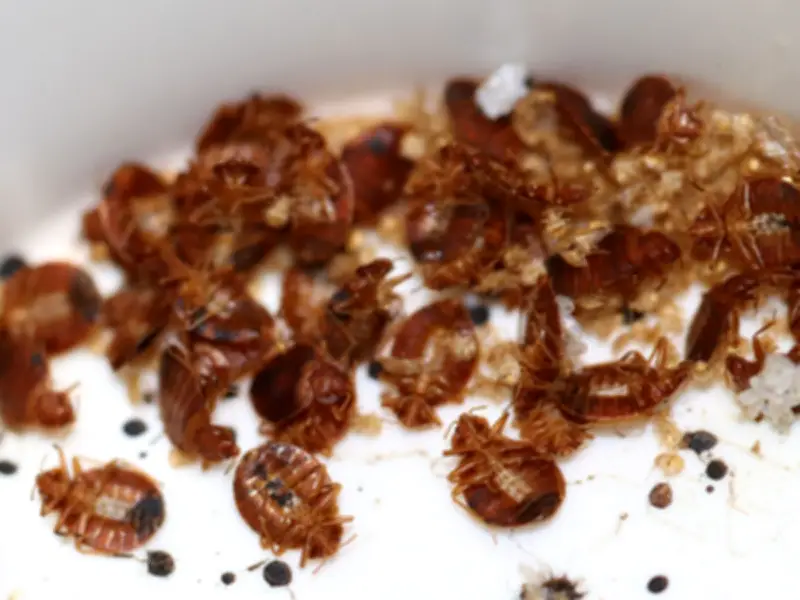
As temperatures soar across the UK, residents are being warned that their beds could be housing 'mutant' bugs. Experts say Britain has been hit by a plague of insecticide-resistant bed bugs that have hitched rides home in holiday luggage and are now thriving thanks to a series of heatwaves.
Rapid Growth of Infestations
The tiny blood-sucking insects have become one of the UK's fastest-growing household pests, with professionals saying the problem has worsened almost every year over the past decade. Blago Manov, Managing Director of Bed Bug Hunters, who has spent 14 years tackling infestations across the country, says the rising temperatures and the UK's growing love of international travel are the biggest reasons behind the surge.
"There has been a gradual increase over the past 10 years or so," Manov said. "I started this business from zero 14 years ago and there's been an increase almost every year."
Role of Travel and Hotspots
According to Manov, airports, hotels, and holiday accommodation have become major hotspots where the insects spread from one traveller to another. "It's primarily the fact there are so many people travelling in and out of the country on a regular basis," he explained. "In my opinion, airport luggage departments are causing the highest risk of cross-contamination, as well as hotels, hostels and Airbnbs. It's a constant ongoing thing."
Unlike many household pests, bed bugs do not fly or jump. Instead, they rely on humans to transport them from place to place. The insects are remarkably adept hitchhikers, clinging to luggage, clothing, and personal belongings before quietly establishing themselves inside homes.
Insecticide Resistance and Evolution
Experts say today's bed bugs are much tougher than those previous generations encountered. Rather than being wiped out by conventional insecticides, many populations have gradually developed resistance after decades of exposure. "Bed bugs have built up some resistance," Manov said. "They've developed this over the past century. Some people call it bed bug evolution - an adaptation."
He explained that the more resilient insects have now spread around the world through international travel. "Bed bugs that are already evolved have started spreading across the whole world, so it's a global problem." With rising temperatures, they reproduce more rapidly, and people travel for holidays in the summer months, leading to a typical rise in call-outs.
Prevention Tips for Travellers
Manov recommends several simple checks while travelling to significantly reduce the chances of bringing unwanted guests home. "When I travel, I always inspect my Airbnb or hotel room," he said. "Inspect the bed frame because the headboards are the most common areas where they hide." Travellers should also pay close attention to their luggage before returning home. "Take the luggage from the luggage belt and inspect it," he advised. Hard-shell suitcases are also less attractive to the insects: "If you have a hard suitcase, it's more unlikely they will settle. If there are fewer pockets, seams or folds, it'll be harder for them to attach themselves."
Professional Treatment Challenges
Once bed bugs become established, getting rid of them can be extremely difficult without professional help. Manov says many people waste valuable time trying shop-bought products that simply are not strong enough to eliminate an infestation. "Some people try to get rid of bed bugs themselves," he said. "The best DIY insecticides contain only 0.3 percent active ingredients, which is not enough to sufficiently poison the bed bugs." By comparison, professional treatments use products with dramatically higher concentrations: "The professional insecticides contain 40 percent active ingredients, so it's an immense difference."
His company now combines heat-based treatments with insecticides rather than relying on chemicals alone. "We don't do spray-only because it's outdated," he explained. "We combine steam and spray, or hot air and spray." Steam instantly kills bugs and their eggs through thermal shock, while heated air eradicates infestations over several hours before insecticides provide lasting protection. According to Manov, combining hot air and spray achieves a success rate of around 97 percent, although it comes at a cost. Steam and spray treatments start at around £300 for an entire property, while the more intensive hot-air treatment typically costs more than £1,000 because it requires specialist equipment and two technicians working for most of the day.




