
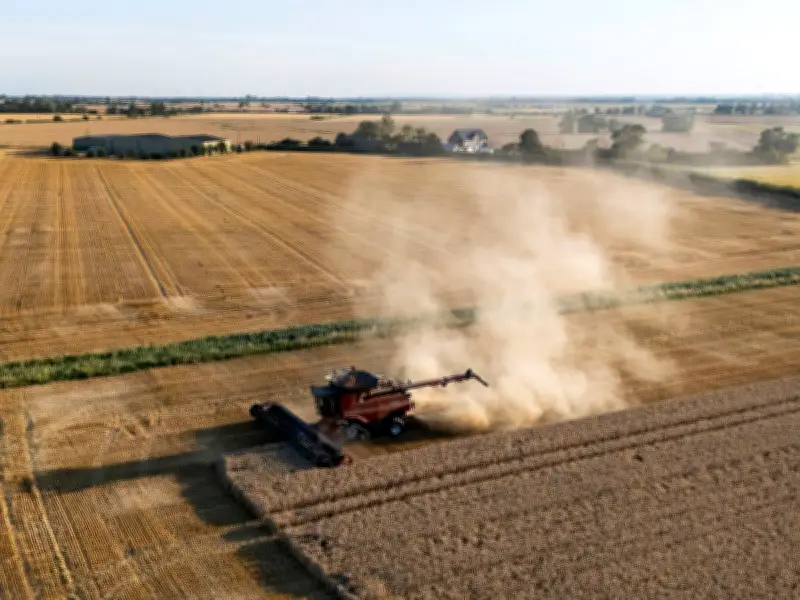
The National Farmers' Union (NFU) has demanded tax breaks on critical water shortage systems as it warned that the UK could face shortages of certain foods after four heatwaves and a prolonged drought. The Government has said the drought has now hit half of England, and eight English regions have been placed under heat health alerts this week as temperatures are expected to surge to 34C.
Farmers demand urgent support
Farmers working with specific crops say the oppressive heat is stunting growth, and they are racing to save what they can. Some parts of the country have not seen rain for more than a month, leaving wheat at roughly half of its usual height.
Tom Bradshaw, president of the NFU, said production of oats this year has been "very, very poor" and that wheat has been suffering similarly. He called on the Prime Minister to take urgent action, suggesting farmers should receive tax breaks so they can build water storage systems.
Speaking to BBC Radio 4, Mr Bradshaw said: "We have taken our food supply for granted for far too long. Those other countries around the world that we currently rely on to produce our food and vegetables, their climates are changing as well."
"It does feel like there is going be some shortages of [food] products." He added: "We have to recognise that water security is a critical part of our food security and food security is our national security."
Call for reservoirs and investment
Alongside tax breaks, Mr Bradshaw urged the Government to invest more in reservoirs, saying this could help preserve water supplies once they grow over the winter. "Let's draw a line in the sand and make sure we prioritise domestic food production to deliver growth across the UK," he said.
According to the Met Office, drought-hit England has seen just 5.6mm of rainfall up to July 30 – a vanishing proportion, just eight percent of its long-term meteorological average for the month. The figure is also less than half of a previous record set in 1911, when authorities recorded 13.4mm that July.
Wales, which is not yet in drought, reported just 7.9mm of rainfall, again eight percent of the home nation's long-term average for the month.
Dairy farmers feel the heat
The hot weather is also creating issues for dairy farmers, whose livestock tend to eat less – and ultimately produce less – when temperatures rise. Sophie Gregory, a dairy farmer from Dorset, said that when the UK recorded some of its hottest ever temperatures in June, it is a "challenge" to keep cows cool.
She said: "We've got 600 dairy cows on our farm and keeping them – and us – cool in this heat is a challenge. Their milk yields drop in hot weather because they tend to eat less, so this is both a matter of animal welfare and food production that we take very seriously."
"Climate change is making it harder and harder to farm, but we’ve been planning ahead for several years now and doing all we can to keep our cows cool; We make the most of shade from trees, get jobs done early in the morning and later in the evening, don’t rush the cows, and have a misting system and fans on full blast in the milking parlour."
"We also make sure lots of drinking water is available as the cows will drink several litres more on hot days. Farmers like us are on the front line of climate change though, and the only way to stop heat waves like this getting worse is reducing global and national emissions."




