
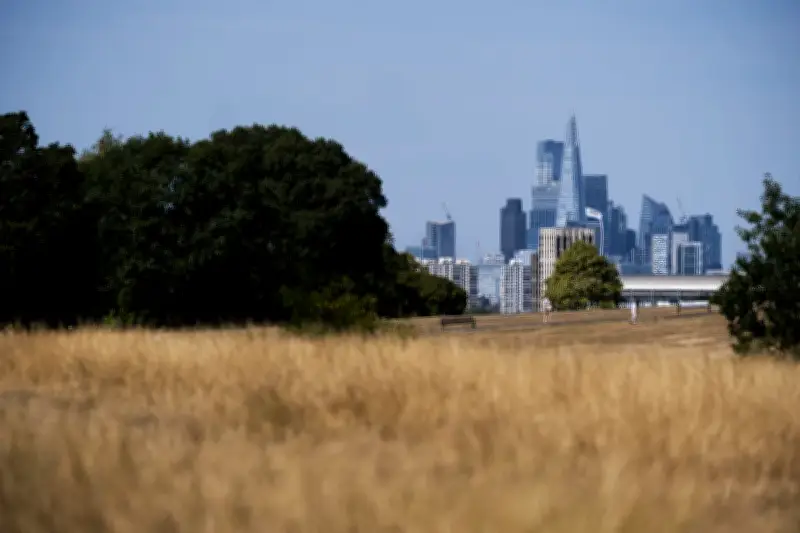
Parts of the UK could be set to bake in 38C temperatures as a firefighters’ union chief warned the country faces a “national emergency” over wildfires.
Some areas face a fifth heatwave of the summer, as the Met Office revealed the UK is on course for its hottest summer on record. Rare amber “extreme heat” warnings have been issued by the forecaster for London and parts of the South East, East Midlands, East of England, West Midlands and South Yorkshire from 9am to midnight on Thursday.
Temperatures could hit 33C on Wednesday before potentially reaching highs of 37C or 38C on Thursday, the Met Office say.
Heatwave warnings and forecasts
Met Office chief forecaster Chris Bulmer said: “While the peak heat will be more short-lived than recent heatwaves, temperatures widely into the mid-30s Celsius on Thursday brings the potential for impacts for some, which is why a Met Office warning has been issued.”
“High pressure is now becoming dominant and temperatures will build day by day. Southerly and south-easterly winds will also tap into the hot conditions over Europe which helps develop this further notable heat in what has been a hot and dry summer so far for many in the south of the UK.”
Wildfire emergency and fire service response
Steve Wright, general secretary of the Fire Brigades Union, told Times Radio that the country faces a national emergency “right now”, with blazes seen “all across” the UK.
Firefighters have responded to 966 wildfires across England and Wales this year, including 185 in the first 10 days of August alone, while July was the busiest month on record for wildfires with 458 incidents, the National Fire Chiefs Council (NFCC) said. Crews from Hampshire and Isle of Wight Fire and Rescue Service have battled a fire in the New Forest, which started after a van caught fire on the A31 near Ringwood on Sunday. The area hit by the blaze is protected heathland and home to a number of rare species, according to the New Forest National Park Authority.
Mr Wright said: “In many parts of the country, firefighters do not have the new modern equipment to deal with these. They do not have the new modern personal protective equipment, the lightweight fire kit that we wear, the right helmets, lightweight helmets, breathable uniforms to make sure they’re better protected, their health is protected when they’re out dealing with these incidents for hours and hours on end.”
Drought and water restrictions
The Met Office only average conditions are needed for the rest of August to beat the record for the warmest summer set just last year. Nearly three quarters of England and the whole of Wales are in drought, after a record dry July and very dry start to August has combined with high temperatures to put pressure on water resources.
Southern Water has applied for a rare drought order which would ban businesses from non-essential water use, including cleaning cars and filling non-domestic swimming pools, saying an “exceptional” lack of rain has threatened supplies in Hampshire and the Isle of Wight. It warned that 165,000 people in the Southampton West supply area could face restricted supplies. Environment Secretary Angela Eagle will decide on the application, which would be the first such ban since May 2006.
Elsewhere, water stations opened in Ilford, east London, and Chigwell, Essex, after burst water mains left homes and businesses with no water or low water pressure since Sunday, Thames Water said. Record-breaking heatwaves in May and June led to the deaths of more than 2,800 people, while parts of the country were hit with further heatwaves last month as England and Wales endured their driest July since records began in 1836.
The Environment Agency said 71.3% of England is now experiencing “flash drought”, as a dry start to August followed the country’s driest July on record. Flash drought is one which develops very quickly because of a combination of very low rainfall and high temperatures.
Health Secretary Yvette Cooper said: “I want to thank NHS staff who are once again stepping up to cope with the extra pressures that hot weather brings. Extreme heat can be dangerous, so staying aware of warnings and alerts in place can make a real difference.”




