
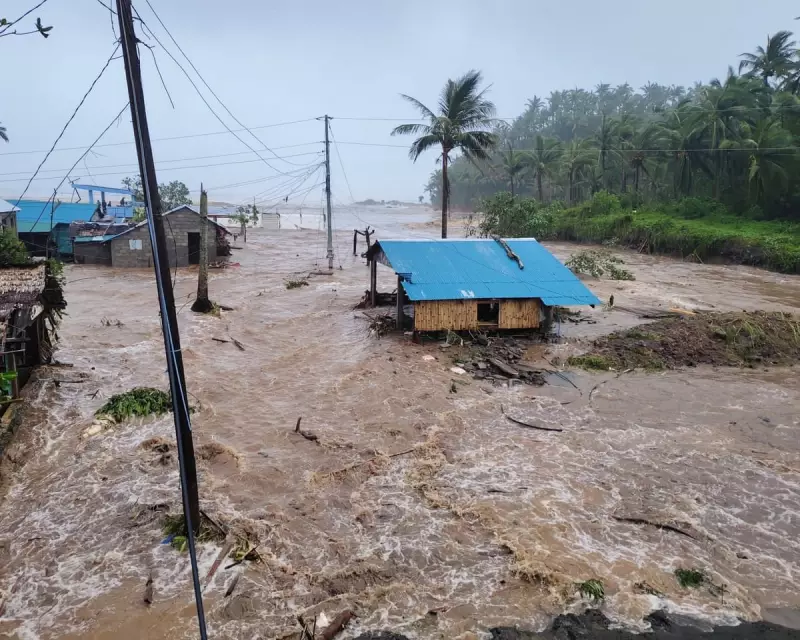
Catastrophic Impact as Super Typhoon Ravages Archipelago
The Philippines is reeling from the devastating impact of Super Typhoon Fung-wong, which struck on 9th November 2025, resulting in at least two confirmed fatalities and the displacement of more than 1.4 million people. The storm, one of the most powerful to threaten the nation in recent years, triggered catastrophic flash flooding, destructive landslides, and gale-force winds across the archipelago.
Widespread Devastation and Heroic Rescues
Authorities reported that the massive storm system, with a rain and wind band stretching an immense 1,800 kilometres wide, was forecast to affect two-thirds of the country. In Pandan, within Catanduanes province, the scene was particularly dire. Disaster response footage revealed floodwaters reaching rooftop levels, with numerous houses being completely washed away.
Roberto Monterola, a disaster-mitigation officer for Catanduanes, described dramatic rescue efforts to the Associated Press. "Our personnel rescued 14 people who were trapped on the roof of a house engulfed in flood in a low-lying neighbourhood," he stated. "A father also called in panic, saying the roof of his house was about to be ripped off by the wind. We saved him and four relatives." Tragically, at least one person in the province drowned in the flash flooding.
Aftermath and Escalating Climate Threat
By Monday morning, the national disaster response service (NDRRMC) confirmed the two deaths: one by drowning in Catanduanes and another in eastern Samar where a woman was killed when her house collapsed. The super typhoon was later downgraded to a typhoon as it crossed the Philippines' largest island, though it still packed sustained winds of 165 km/h with gusts exceeding a terrifying 275 km/h.
The NDRRMC is currently assessing the extensive damage to infrastructure and homes. To manage the humanitarian crisis, approximately 6,000 evacuation centres have been opened, providing temporary shelter for 92,000 families. This disaster compounds the nation's suffering, arriving just days after Typhoon Kalmaegi, which left 224 dead and 135 missing.
Scientists point to a disturbing trend, noting that the rate of super-typhoons hitting the Philippines has increased by more than 100% over the last two decades. Fung-wong marks the 21st typhoon to strike the country in 2025 alone. The World Bank estimates these intense storms cause an average of US$3.5m in damage annually. In response to the cumulative devastation, President Ferdinand Marcos Jr. declared a state of emergency last Thursday.