Trump's Cold Weather Remarks Spark Climate Debate as Scientists Defend Global Warming Evidence
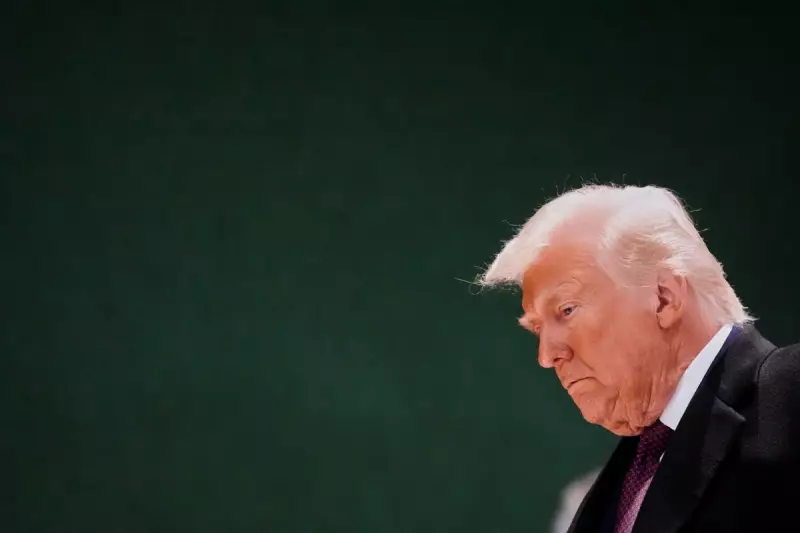
As a significant winter storm brings freezing temperatures, treacherous ice conditions, and heavy snowfall across much of the United States, President Donald Trump has taken to social media to publicly question the reality of global warming. In a brief but pointed post on his Truth Social platform, the president suggested that current cold conditions contradict scientific claims about planetary heating, describing the weather as nearly unprecedented and labelling climate advocates as "environmental insurrectionists."
Scientific Community Responds to Weather-Climate Confusion
More than a dozen climate scientists contacted by The Associated Press have firmly rejected the president's assertions, explaining that cold winter weather in specific regions does not disprove the well-documented phenomenon of global warming. Experts emphasise the crucial distinction between short-term local weather patterns and long-term global climate trends, noting that even as eastern parts of the United States experience below-average temperatures, much of the world remains warmer than historical averages.
"Global warming hasn't gone anywhere, it's here," stated Princeton University climate scientist Gabriel Vecchi, reflecting the consensus view among researchers. Scientific data confirms that the last three years have been the warmest on record globally, with warming rates accelerating in recent periods.

Examining the Temperature Data and Historical Context
According to National Oceanic and Atmospheric Administration records, global winter temperatures have increased by approximately 1.3 degrees Fahrenheit since 1995, with the previous two winters ranking as the warmest ever recorded. While the United States has warmed at a slightly slower rate than the global average, last month marked the fifth-hottest December both globally and within the US.
Meteorologists note that current cold temperatures, while significant, are not historically unprecedented. Government records reveal that much colder conditions occurred in previous decades, with temperature extremes in cities like Minneapolis, Chicago, and Washington D.C. remaining well above their all-time record lows.
"Truly historic cold waves, like those in 1978–79, 1983–85, or earlier decades, were often colder and more persistent over large regions," explained Northern Illinois University meteorology professor Victor Gensini. "We are also less accustomed to severe cold now because winters overall are warmer than they were several decades ago."
The Complex Relationship Between Warming and Winter Weather
Climate scientists stress that cold days and winter seasons are projected to continue even as global temperatures rise, though they will become less frequent over time. Some researchers are investigating whether warming in the Arctic region might actually contribute to more extreme winter outbreaks in eastern North America by altering atmospheric circulation patterns, though this remains an active area of scientific inquiry without definitive consensus.
"Even as the Earth warms, cold days and cold winters are not projected to disappear, just become fewer in number," said Princeton University climate scientist Michael Oppenheimer. "In addition, what happens in the U.S. during a brief period of days is not an indication of what's happening to the U.S. as a whole or the Earth as a whole over the long term."
Record Temperature Analysis and Scientific Perspective
Analysis of weather station data reveals that record high temperatures continue to vastly outnumber record lows across the United States. While some daily cold records may be broken during the current weather system, particularly in the Plains, Texas, and Louisiana regions, meteorologists indicate that century-old temperature records are unlikely to be surpassed.

Climate scientist Daniel Swain of the California Institute for Water Resources characterised the president's social media statement as containing "a remarkable amount of inflammatory language and factually inaccurate assertions." He added, "First of all, global warming continues—and has in fact been progressing at an increased rate in recent years."
Former NOAA chief scientist Ryan Maue acknowledged that President Trump had appropriately highlighted the impending severe cold weather, noting that "in a roundabout way, while he is trolling about global warming it seems to be on his mind." However, Maue's analysis confirms that current conditions, while significant, do not approach the severity of historical cold waves that affected larger regions with greater intensity.