
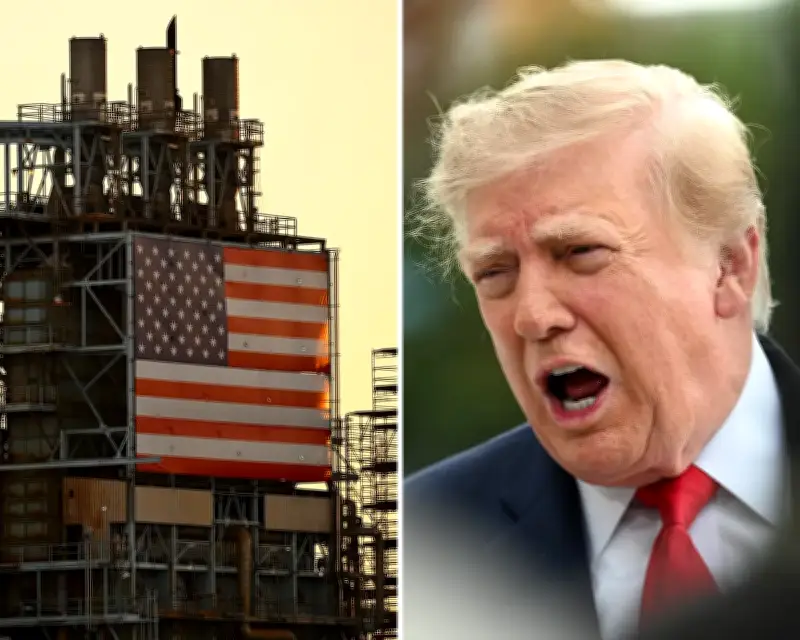
California Governor Gavin Newsom has described Donald Trump as the "greatest gift" to the environmental movement, citing the fallout from the US-Israel war on Iran. Speaking to the Guardian during Climate Week in New York, Newsom argued that the conflict has exposed the fragility of fossil fuel dependence.
"He's woken the world up to how vulnerable we are to petro-dictatorships, how vulnerable we are to disruptions in the Middle East," Newsom said. "This war has completely gutted any sort of romantic notions of energy security and it's compelled folks to think differently. It's accelerating investments and clean energy and renewables."
Global Energy Shifts and Emissions Drop
The Strait of Hormuz, through which a fifth of the world's oil and gas exports usually flow, has been routinely snarled since the Iran war began in February, causing fossil fuel costs to soar. Countries have responded by cutting oil and gas use and turning to solar and wind, though coal use has seen a small uptick.
Carbon Brief estimates global fossil fuel emissions will drop by 0.5% this year due to the crisis. The International Energy Agency suggests the peak in oil consumption may arrive this year rather than the previous estimate of 2029.
Critics Question the Environmentalist Label
Trump's administration has eviscerated pollution limits on cars, trucks and power plants, funnelled taxpayer cash to the fossil fuel industry, and cancelled renewable energy projects. He has called environmentalists "terrorists" and the climate crisis "a hoax", and has slashed conservation rules.
Rob Jackson, a climate scientist at Stanford University, said Newsom was guilty of "tunnel vision" in his framing of Trump. "Trump's illegal attack on Iran may hasten clean energy in some countries, but he has gutted green tech in the United States and set us back decades," Jackson said. "The notion that he is an accidental environmentalist is wishful thinking."
Oil Industry Profits and Renewables Momentum
The conflict has enriched the oil and gas industry, netting eight of the largest companies more than $90bn in the first three months of the war. Exxon forecast that the world will still use 105m barrels of oil a day in 2050, up from 100m barrels last year, with two-thirds of the global energy mix remaining oil, gas and coal.
Investment in renewables globally is now double that of fossil fuels, almost all new power added to grids comes from clean sources, and one in four cars sold last year was electric. Sonia Dunlop, chief executive of the Global Solar Council, noted a massive surge in demand for solar and battery storage worldwide.
Al Gore, the former US vice-president, said: "The price of solar has come down so quickly that there are now 100,000 solar panels installed every day in Africa. In parts of Pakistan, a common bride's dowry is now three panels and an inverter, instead of 10 or 12 goats."
Dunlop insisted the momentum won't stop once the conflict ends. "Once someone decides to step off the fossil fuel rollercoaster, they're off it," she said. Asked if this makes Trump an environmentalist, she demurred: "I wouldn't say that. He certainly has his own ideas."




