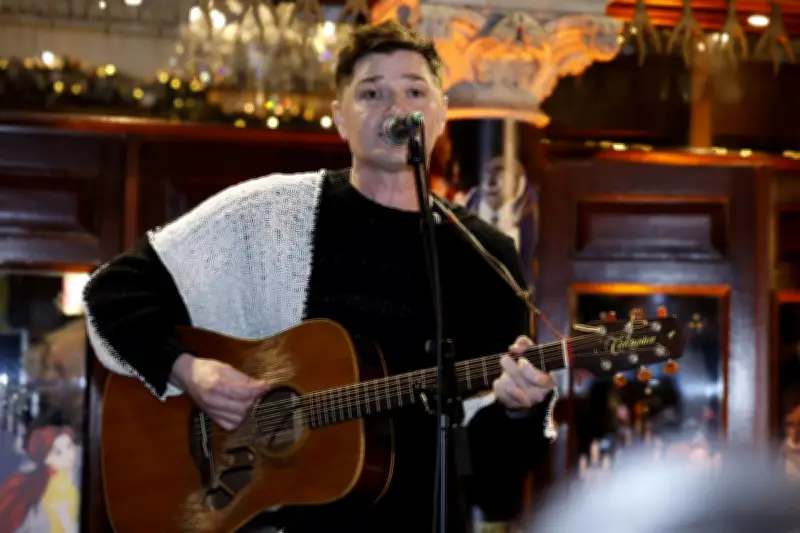
The Script's lead singer Danny O'Donoghue has thrown his support behind a Sinn Féin motion aimed at protecting Irish artists' copyright in the age of Artificial Intelligence (AI), describing the current situation as "intellectual property theft on an industrial scale."
O'Donoghue's Discovery of Song Scraping
Speaking to RTÉ's Morning Ireland, O'Donoghue revealed that last week he discovered 125 songs—both his solo work and The Script's catalogue—had been scraped and used for training by five major AI companies. He called this "outrageous" and a clear violation of intellectual property rights.
"You don't just class a song as something one person wrote, there could be an ecosystem of small businesses combined in there," O'Donoghue said. "I just think it's an absolute travesty."
Motion to Be Debated in Irish Parliament
The Sinn Féin motion, titled "Protecting the Copyright of Irish Artists in the era of Artificial Intelligence," is set to be debated in the Dáil (Irish Parliament) on Tuesday. It was tabled by the party's Arts and Culture spokesman, Aengus Ó Snodaigh. O'Donoghue endorsed the motion, stating it draws "a clear line in the sand for those who are against musicians in Ireland and those who are for musicians in Ireland."
The singer emphasised that while The Script is an established act, he is representing all Irish musicians, particularly those at the grassroots level. "There are a lot more lower-level musicians than there are people at the tip of the iceberg," he noted.
Existing Copyright Laws Insufficient
O'Donoghue acknowledged that copyright laws exist but argued that musicians lack the resources to enforce them. "Musicians have spent a lifetime creating music, not lobbying for power or money," he said. "If this was Coca-Cola and we stole their formula, you could be damn sure we'd be brought to court over it."
Impact on the Music Industry
The singer highlighted that AI-generated songs are "diluting the market," with 80,000 new songs released daily, which he says "covers over all these amazing new artists that are out there." He called for Ireland to use its presidency of the Council of Europe to demonstrate that it "cares about our artists."
O'Donoghue proposed several legislative measures, including ensuring fair pay and proper licensing for artists, introducing AI "opt-out rights" so artists can consent to and be compensated for the use of their work in AI training, and preventing public funding from being allocated to AI-generated content.
Government Response
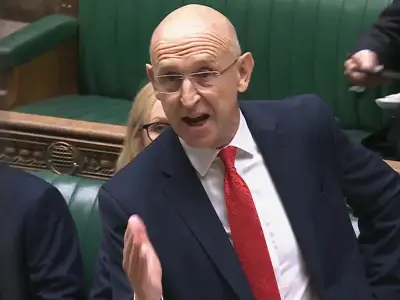
Minister for Research, Innovation and Science James Lawless commented on the issue ahead of a Cabinet meeting on Tuesday. While expressing sympathy for musicians, he described the matter as "difficult" and "complex." He noted that a private members' bill from the opposition in the last week of the Dáil is unlikely to resolve it.
"I don't think, in honesty, it's going to be solved by a private members' bill from opposition put through in the last week of the Dáil," Lawless said, adding that he wasn't being derogatory toward Sinn Féin's efforts. He acknowledged the need for European regulation and said the Government will "engage" with it, stressing the urgency: "I think it's a very real and present danger to the musical industry right now."
Lawless also noted that politicians are similarly vulnerable to AI scraping and deepfakes, with their images and speech patterns being replicated and disseminated.