
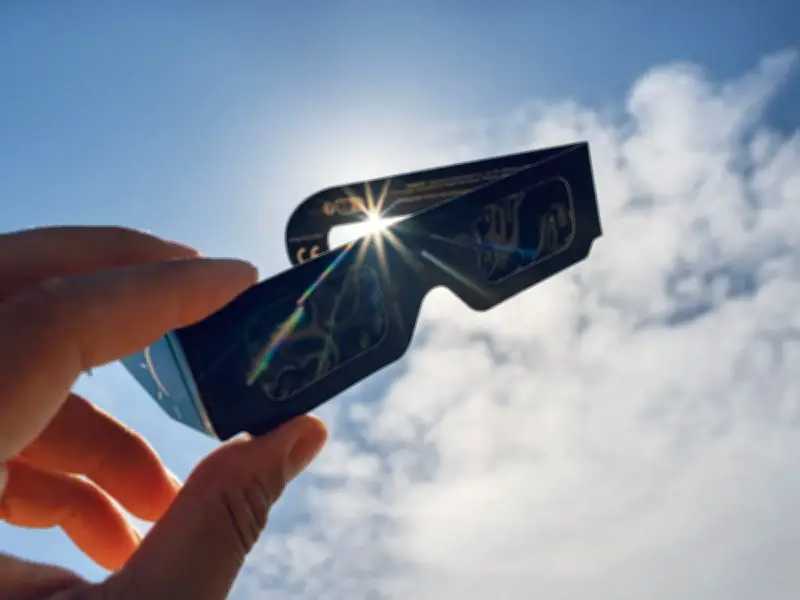
Specialists have warned Scots to check their solar eclipse glasses carry the ISO 12312-2 certification before viewing tonight's celestial display, as dangerous fake alternatives circulate online.
More than 90 percent of the sun will be blocked by the moon between 6:17pm and 8:06pm on August 12, marking the most visible eclipse since the total display in 1999. Glasses designed for the event have largely sold out, though some may remain online.
Safety warning from eye specialists
The Royal College of Ophthalmologists issued a warning on August 10, stressing that glasses must feature the correct filters to protect eyes from permanent damage. Without proper certification, sufficient radiation can reach the retina, causing damage that only becomes noticeable after a few hours.
Binoculars, telescopes and cameras are also unsafe unless fitted with professionally placed solar filters. Anyone noticing vision changes after looking at the sun should seek prompt advice from an eye-care professional.
Survey reveals past eclipse damage
The warning follows a national survey by the college, which found 70 percent of patients had eclipse-related visual loss after the 1999 event, mostly from viewing without protection.
College President Mohamed Elalfy, a consultant ophthalmologist, said: "The safest way to enjoy the eclipse is to observe it indirectly, such as by watching a live broadcast."
He added: "Looking directly at the sun during a solar eclipse can cause damage to the retina, potentially damaging the cells responsible for sharp central vision. Crucially, the retina has no pain receptors, so people will not feel the damage as it happens."
Safe viewing methods and regional visibility
Indirect methods include pinhole projection, using a pin to make a tiny hole in a card, which projects a crescent image of the sun onto another card.
The Met Office confirmed the West of Scotland will have the best visibility, with 92 to 94 percent coverage in the Western Isles and along the west coast including Glasgow. Inverness is expected to see 90.74 percent coverage, Edinburgh 90.71 percent, and parts of Aberdeenshire, Orkney and Shetland around 88 to 90 percent.




