
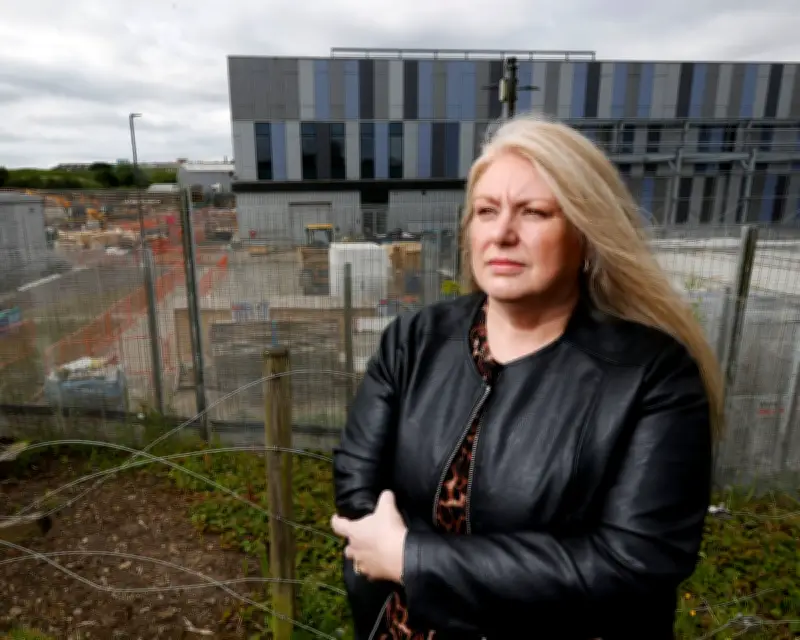
Residents of Newarthill, a village east of Glasgow, are expressing deep concerns over a proposed AI datacentre complex, fearing they were misled about the project's benefits. The development, part of the UK government's AI growth zone initiative, was touted to bring thousands of high-value jobs and significant community investment. However, local people now suspect the promises may be hollow, with potential land loss and environmental impacts looming.
Sweeteners and Suspicion
Late last year, representatives of Oakes Energy Services began door-knocking in Newarthill, offering residents individual meetings to discuss plans for a solar farm. According to letters reviewed by the Guardian, they proposed free solar panels, tree planting, or cash for properties. Diane Davidson, a resident, described these offers as a "sweetener" to discourage opposition, noting, "None of these sweeteners are enforceable, there's nothing written down."
Two months later, the government designated Lanarkshire as a key AI growth zone, announcing a multibillion-pound development by US company CoreWeave and DataVita, an arm of a Glasgow real-estate firm. The project involves building AI datacentres—large buildings filled with specialised chips for AI calculations. Tech companies globally are investing heavily in such infrastructure, betting on AI's transformative potential.
Energy Demands Raise Alarm
Initially, residents were not overly concerned. "The datacentre itself is not much. It's just a big imposing building," said Davidson. But as they learned about the vast energy requirements, anxiety grew. "The quantities it would need, it would definitely approach into our area," she added. "It was like: oh, crikey. It was just growing arms and legs the more we looked into it."
A Guardian investigation found that public plans for the AI growth zone may misrepresent actual intentions. The government and DataVita initially claimed the site would be powered by "on-site" renewable energy. However, when pressed, they admitted the datacentre would connect to Britain's straining grid. DataVita stated it would have 1GW of power from energy parks, requiring an estimated 44 sq km of land—yet it appears to have less than a tenth of that.
Land Speculation and Community Fears
Oakes Energy Services and another company, Locogen, have submitted planning applications for solar farms adjacent to the site. Although DataVita denies any commercial connection, materials submitted to the government suggest it plans to use surrounding land for renewable energy parks. An audit by the Scottish government, obtained under FOI, states DataVita's proposal "leverages the region's strength as a renewable energy hub by proposing that available, adjacent land at both sites is used to build renewable energy parks."
Local residents have pressed for clarity but received little. In an April meeting, energy company representatives refused to disclose who their customer was, according to Meghan Gallacher, a Scottish parliament member. "I don't believe in relation to the planning proposal that the company has been honest in relation to how it's engaged with local residents," she said. DataVita responded that all proposals are subject to local and national planning legislation through an open public process.
Reawakening Old Fears
The AI growth zone has revived concerns in nearby Airdrie, where residents fought a luxury housing development called EuroPark for a decade. The site, owned by the daughters of the late Tory minister William Whitelaw, was rejected by local authorities and on appeal to the Scottish government. Ann Glen, a local historian, said, "Now we're back here, and instead of this EuroPark, we have a datacentre." Davidson added, "Everybody is quite agitated and quite worried about it. Nobody is getting any benefit out of it. They are worried about their property values going down."
Jobs and Community Fund Questioned
The promised 3,400 "high-value" jobs and a community fund of up to £543m have come under scrutiny. The Guardian learned that the fund currently has no money; it is planned from future DataVita revenues. The Scottish charity Action to Protect Rural Scotland (APRS) filed an FOI request and found that the job figure was based on industry estimates for another site—Cambois in Northumberland—multiplied for Lanarkshire's larger size. APRS concluded these estimates were inflated, suggesting most jobs would be temporary construction roles. "Our conclusion is that the UK government figures given in their press release could be a hundred times bigger than the probable jobs that the datacentre will create," wrote APRS. The Department for Science, Innovation and Technology stands by its estimate, which includes construction, supply chain, and wider regional economy roles.
Smoke and Mirrors
North Lanarkshire includes some of Scotland's most deprived regions, with a history of coal and steel industries now gone. Glen said the AI growth zone policy is condescending to "hardworking people" and accused it of being "smoke and mirrors." She added, "People thinking that – jobs – oh, phenomenal, what will it be like? A new age! But they're being misled in a way, there's no jobs. They don't realise to what extent they're being conned."




