
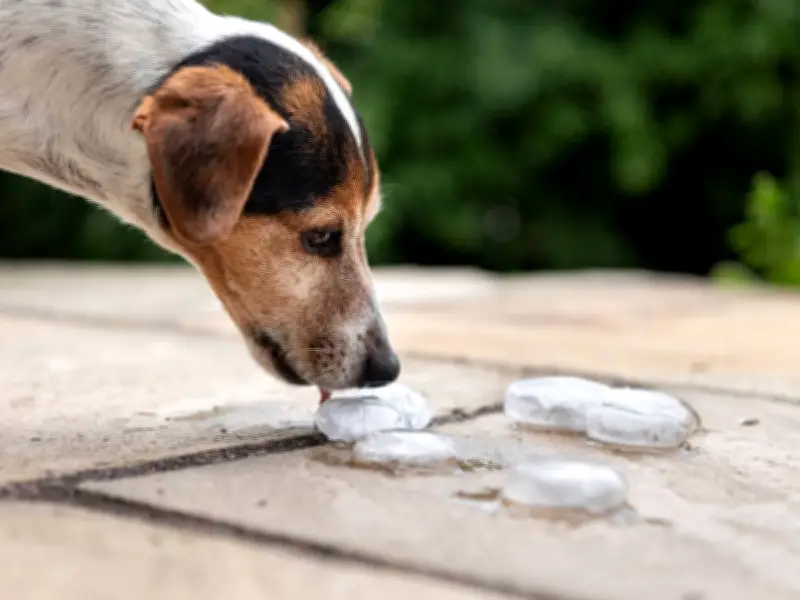
The RSPCA has settled the debate over whether it is safe to give dogs ice cubes during a heatwave, as temperatures in the UK soar towards 40 degrees Celsius. The animal welfare charity confirmed there is no evidence that ice cubes cause bloat or gastric dilation volvulus (GDV), a life-threatening condition in dogs.
Ice Cubes Do Not Cause Bloat, Says RSPCA
While some owners have been adding ice cubes to water bowls, others raised concerns about potential risks. A RSPCA spokeswoman told the Mirror: “There have been some anecdotal reports circulated online that giving dogs ice cubes can cause them to develop bloat, or gastric dilation volvulus (GDV). However, studies into the risk factors for GDV have not identified ice cubes as a risk factor.”
The charity recommends freezing a dog’s water bowl or Kong toy before adding water or treats to keep them cool longer. “Putting ice cubes into your dog or cat’s water bowl or making some tasty ice cube treats is another good idea,” the spokeswoman added.
Heatwave Safety Tips for Pets
The RSPCA filmed a pavement reaching 61 degrees Celsius, hot enough to burn pets’ paws. Esme Wheeler, the RSPCA’s dog welfare expert, urged owners to take immediate action. “This weather is extreme and it’s a life or death situation for some people, let alone animals, who rely on us to help them survive the intense temperatures,” she said.
Essential steps include providing multiple water bowls, keeping pets indoors, skipping walks, and offering shade for wildlife. Damp towels or ice packs wrapped in towels can also provide relief.
Key Actions for Pet Owners
- Provide several water bowls around the home for pets to drink often.
- Place containers of water outside for wild animals.
- Avoid car journeys unless absolutely necessary.
- Keep at least one room cool by closing curtains or using a fan.
- Check pets every hour for signs of heatstroke, fly-strike, or sunburn.
- Do not walk dogs; limit toilet breaks to shaded spots early or late.
- Use damp towels or frozen water bottles wrapped in tea towels.
- Call 999 if you see a dog in a hot car.
The RSPCA emphasizes that these few days of extreme heat must be taken seriously, as it is a life-or-death situation for animals reliant on human care.




